How to Find Your Target Audience With Evidence and AI
Define an audience by the problem they need solved, the constraints they face and the evidence you can verify—not a fictional demographic profile.
Read guideThe Eastmoor Digital blog
Practical thinking for a changing digital world. Search, content, advertising and websites—through the lens of what AI changes, and what still matters.
Explore the libraryStart here / Content & strategy
One real question, a supported answer, and a practical next step.
Read the guide
Find your next useful idea
51 articles
Choose a topic. Find a practical next step.
Define an audience by the problem they need solved, the constraints they face and the evidence you can verify—not a fictional demographic profile.
Read guideA website is not responsive just because the desktop columns stack on a phone.
Read guideA keyword percentage cannot tell you whether a page answers the question. Use this editorial checklist instead.
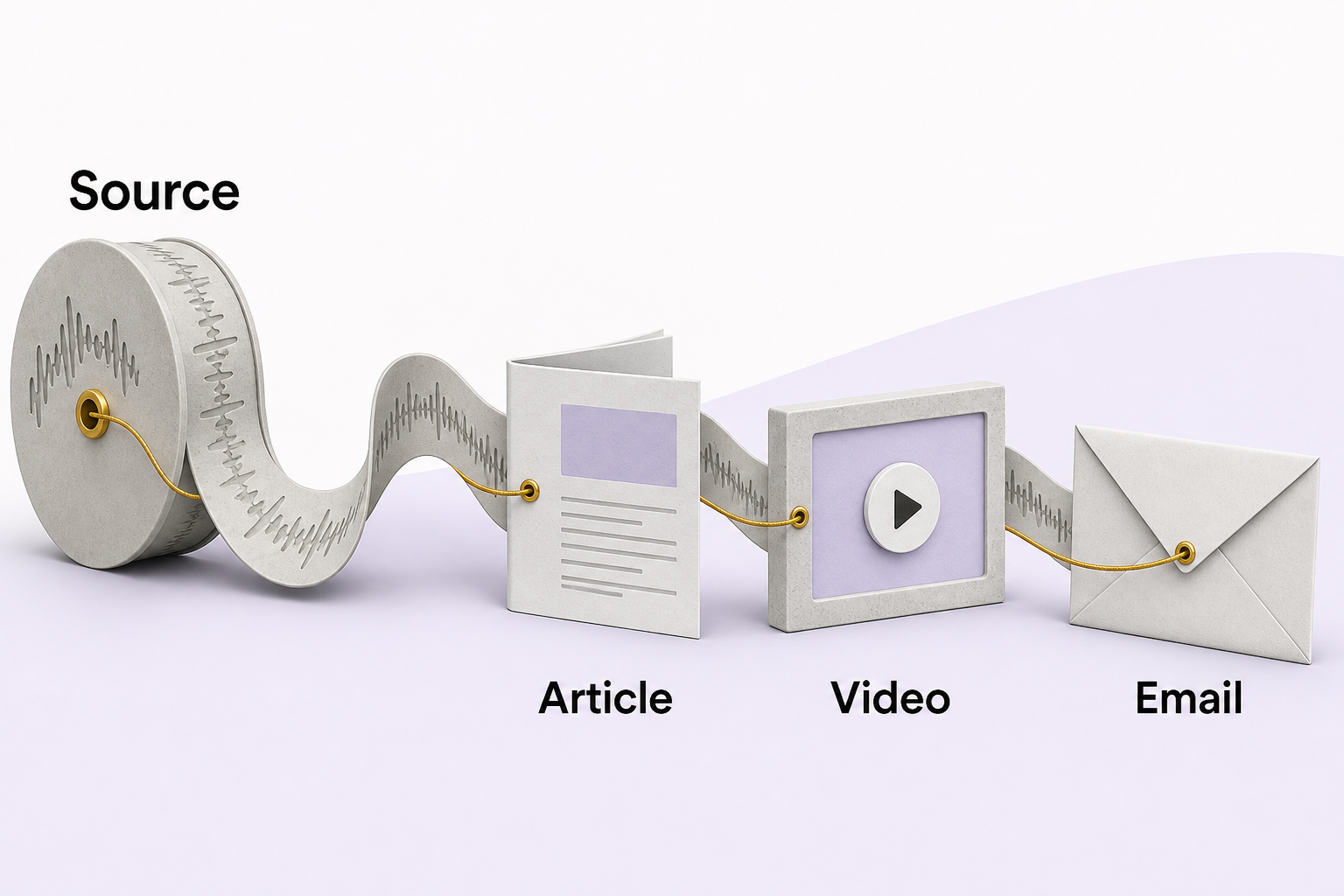
Read guideRepurpose a strong source into useful articles, videos and emails. Use AI for drafts while preserving evidence, context, rights and audience relevance.
Read guideUse a title to make a precise promise—and make sure the page keeps it.
Read guideConnect the question a reader has now to the useful answer they need next.
Read guideGood content gives the reader something to use, not another polished summary of familiar advice.
Read guideA competitor's visibility is a research clue. It is not your content strategy.
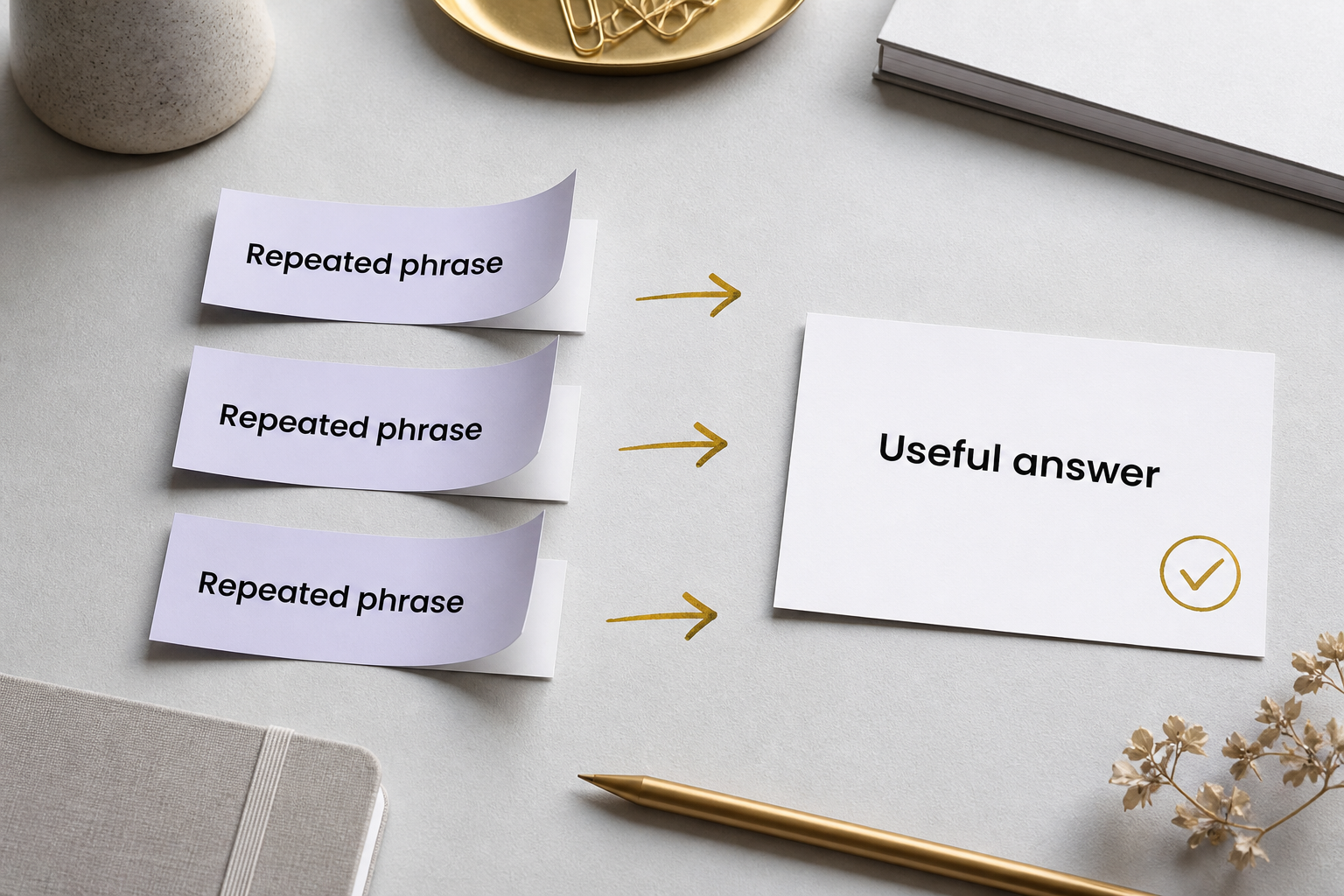
Read guideFind the repeated phrases that weaken a page, then fix the underlying content problem without losing useful answers.
Read guideGive another website a sound reason to reference your work.
Read guideOne heavy plugin can matter more than ten small ones. Audit what each plugin actually does.
Read guideChoose social media platforms around your buyers, content and capacity. Compare channel roles and AI tools before committing to more accounts.
Read guideUse hashtags as useful topic labels, not reach guarantees. Learn how to research tags with AI, check context and measure the content behind them.
Read guideA useful business website answers the right questions and makes the next step dependable.
Read guideA practical GTM workflow that starts with a confirmed business action and ends with verified consent behavior and clean destination data.
Read guideA practical audit that checks what customers see, what your systems record and what connected AI tools are allowed to do.
Read guideMarket to millennial customers using real needs, buying situations and trustworthy content. Use AI research without turning age labels into stereotypes.
Read guideBuild a simple sequence around the subscriber's next question, then test its content, delivery and business value without relying on opens alone.
Read guideMake your site accessible, understandable and useful before adding another SEO feature.
Read guideThe habits worth changing are the ones that obscure your offer, weaken trust or distort decisions—not every older tool or simple webpage.
Read guideAsk appropriately, respond without exposing private details and use AI to identify service issues while keeping the customer's experience intact.
Read guideHelp customers find accurate answers about where you work, what you do and how to contact you.
Read guideBuild an editorial system that stays accurate after the first few posts.
Read guideA practical framework for choosing a website content system that matches how often you publish, who edits and how you recover from mistakes.
Read guideStart with verified facts and a reader's problem. Give AI boundaries before asking it for words.
Read guideOne real question, a supported answer, and a practical next step.
Read guideUse X for business with relevant conversations and verified information. Learn how Grok can support research and why AI reply bots need specific approval.
Read guideGenerate relevant LinkedIn inquiries through clear positioning, useful content and careful follow-up. Learn where AI helps and where automation crosses limits.
Read guideBuild an Instagram business presence with original demonstrations, clear profile information and careful AI editing, translation and performance review.
Read guideUse Facebook for business with clear page information, original content and reliable replies. Understand Meta AI search without chasing algorithm shortcuts.
Read guideClaim the right profile, verify ownership and maintain the business details customers—and AI-assisted search experiences—need to understand you.
Read guideA call-tracking workflow that checks number ownership, routing, privacy and lead quality before using automated summaries to guide decisions.
Read guideTurn real customer questions into clear videos, then use AI for production help without manufacturing expertise or misleading viewers.
Read guideA practical WordPress SEO workflow that checks what the site actually outputs instead of treating green indicators as a ranking promise.
Read guideStart with a clean customer record and a useful next action, then add reporting and AI assistance without assuming every feature is included.
Read guideA practical partner-marketing scorecard that separates sourced deals from influenced deals and turns reporting into specific next actions.
Read guideA business account checklist covering password storage, phishing-resistant sign-in, recovery and the extra risks introduced by connected AI tools.
Read guideA practical guide to matching a campaign promise with page content, accessible design, successful form delivery and meaningful testing.
Read guidePlan Facebook lead ads around qualified inquiries. Review AI optimization, form expectations, CRM delivery and follow-up before increasing spend.
Read guideLearn how display ads reach websites and apps, how AI selects and assembles creative, and how to inspect placements without misreading reports.
Read guideUse Google Trends and Gemini suggestions to research topics, seasonality and regional interest without confusing relative interest with market demand.
Read guideA beginner-friendly GA4 workflow covering collection, meaningful events, privacy, reporting and the limits of automated analysis.
Read guideBuild an online lead generation process that connects useful offers, landing pages, AI assistance and reliable follow-up to qualified opportunities.
Read guideBuild buyer personas from interviews and real buying decisions. Use AI to organize evidence while avoiding invented customers and demographic stereotypes.
Read guideWork backward from a customer goal, use a consistent conversion rate, and find out whether your next move should be better follow-up or more demand.
Read guideLearn email marketing basics for small businesses: permission, authentication, useful content, AI drafting and measurement beyond open rates.
Read guideUnderstand display advertising, Google's Demand Gen transition and AI creative. Build a focused test with clear targeting, safeguards and measurement.
Read guideBuild stronger ads with a clear promise, useful proof and a matching landing page. Learn how to review AI creative and test business outcomes.
Read guideFind what slows the customer down, then verify the fix on the actual page.
Read guideTry seven practical growth experiments using AI, better follow-up and useful content. Learn what to measure and where automation needs limits.
Read guideTurn Search Console into a short list of decisions instead of a dashboard you glance at.
Read guideTry fewer words, a different topic, or reset the library.