
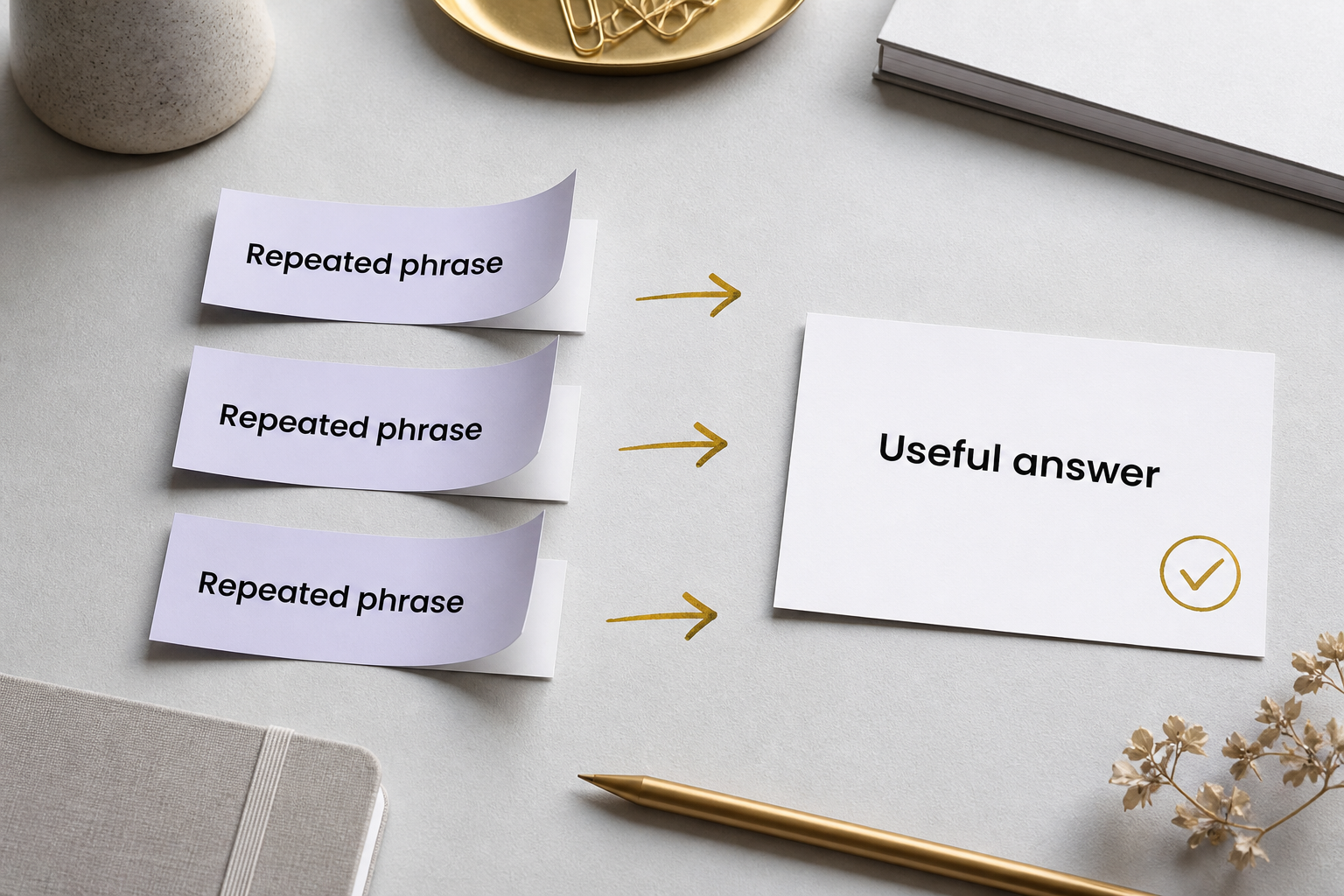
Keyword stuffing happens when a page repeats search phrases to influence rankings instead of helping a person understand the subject. It often starts with a reasonable goal: make the topic clear. It becomes a problem when the writing stops sounding like an answer.
AI tools can make the problem harder to notice. A draft may have polished grammar while repeating a service name in every heading or adding a long list of places the business barely serves. Read the actual page, not just its optimization score.
Recognize the pattern, not just the count
Google names keyword stuffing in its search spam policies. That does not mean a repeated product name automatically creates a violation. Context and purpose matter.
Look for repetition that adds no information: near-identical headings, blocks of place names without local detail, phrases that interrupt normal sentences, and image descriptions written as search-term lists. A technical tutorial may need to repeat an exact command. That is different from forcing a marketing phrase into every paragraph.
Audit one page before changing the whole site
Save the current page, title, description and URL. Record what the page is supposed to help the reader do. Then inspect the visible content and the fields visitors may not immediately see.
- Title: Does it describe one page, or list the same service three ways?
- Headings: Does each heading introduce a different question?
- Body: Can a paragraph lose a repeated phrase without losing meaning?
- Alt text: Does it explain the image’s purpose in context?
- Links: Does the text tell readers where the link goes?
- Location sections: Do they contain verified service information rather than copied city lists?
Mark specific passages. Avoid deleting a whole useful page because a tool reports a high keyword count. You may only need to rewrite a few sections.
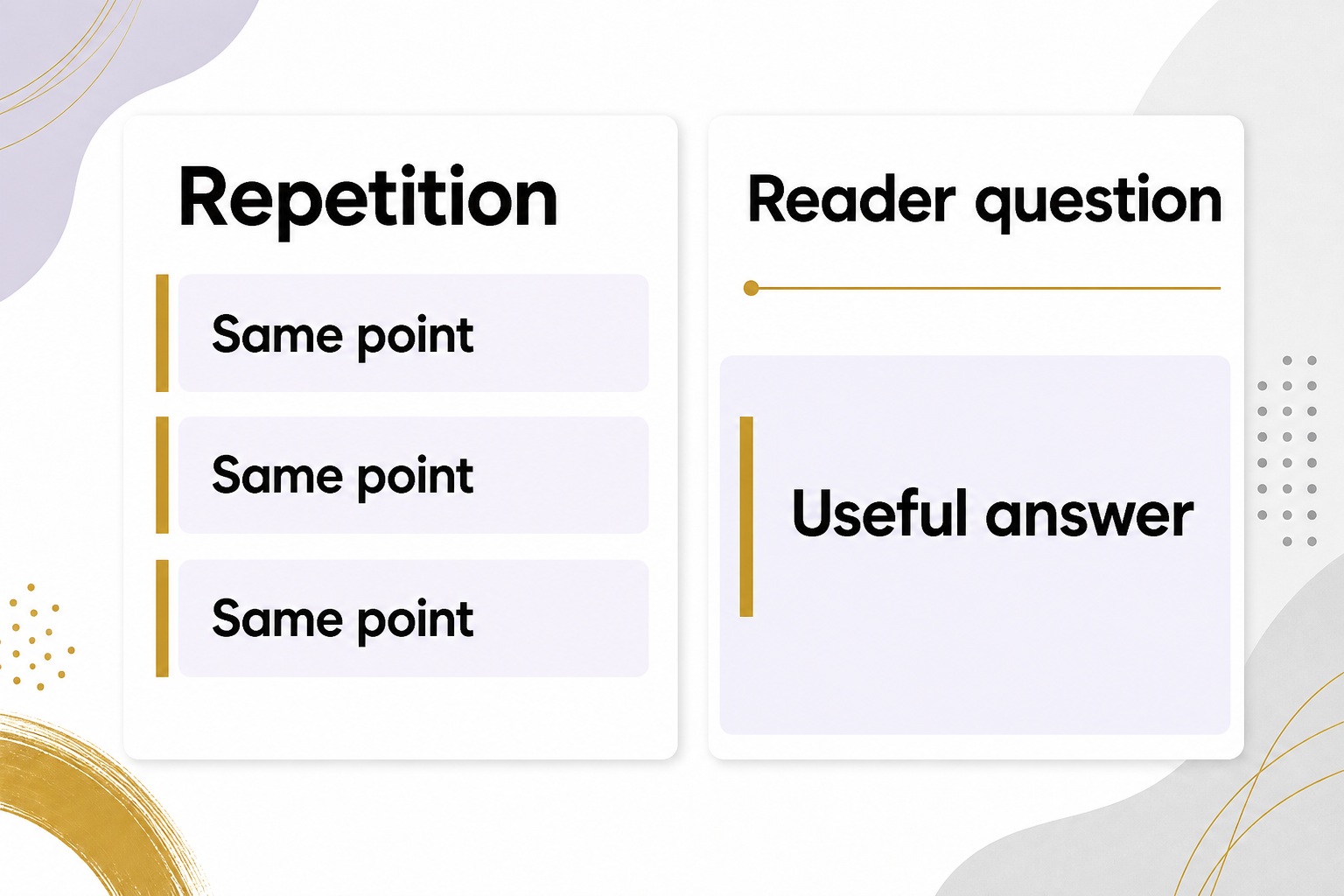
Replace repetition with an answer
Suppose a hypothetical service page says: “Our emergency repair service offers emergency repair when you need emergency repair.” A better passage would explain the actual contact process, availability and limits. Those facts must come from the business.
If availability has not been confirmed, do not let an AI editor invent “24/7.” Write down the missing fact and get it verified. A smoother unsupported claim is a worse outcome than clumsy but truthful copy.
Combine repeated introductions. Replace vague benefit lists with an example, a comparison, a checklist or a direct explanation. Keep relevant terminology where it belongs, including names that readers need to recognize.
Give AI a narrow editing assignment
Provide only the page and a verified fact sheet. Ask: “Flag unnecessary repetition. For each edit, explain what information is preserved. Do not add service claims, locations, results or credentials.” Review its proposals one at a time.
Run a second pass for changed meaning. Did “may help” become “will deliver”? Did “weekday support” become “always available”? Did a real location disappear? The editing review should catch factual drift as well as repeated wording.
Keep the cleanup reversible
Maintain the original URL unless a separate migration is approved. Save the previous copy and metadata, and change a representative page first. Check the published page on a phone and desktop: headings, image descriptions, links and contact buttons must still work.
Document the date and scope. Review search queries, landing-page engagement and qualified inquiries over a sensible period for the business. Do not attribute every change to the rewrite; seasonality, tracking changes and search updates may also matter.
If Search Console shows a manual action, investigate the stated issue directly. Do not assume a traffic decline proves a penalty, or that removing repeated phrases guarantees recovery.
A useful page should make the reader’s next decision easier. When repetition stands in the way, edit for that decision. Talk with Eastmoor Digital about a focused content review.
Sources & further reading
Primary references checked for this refresh. Availability and platform behavior may change.
- Google Search spam policiesChecked 2026-08-31