
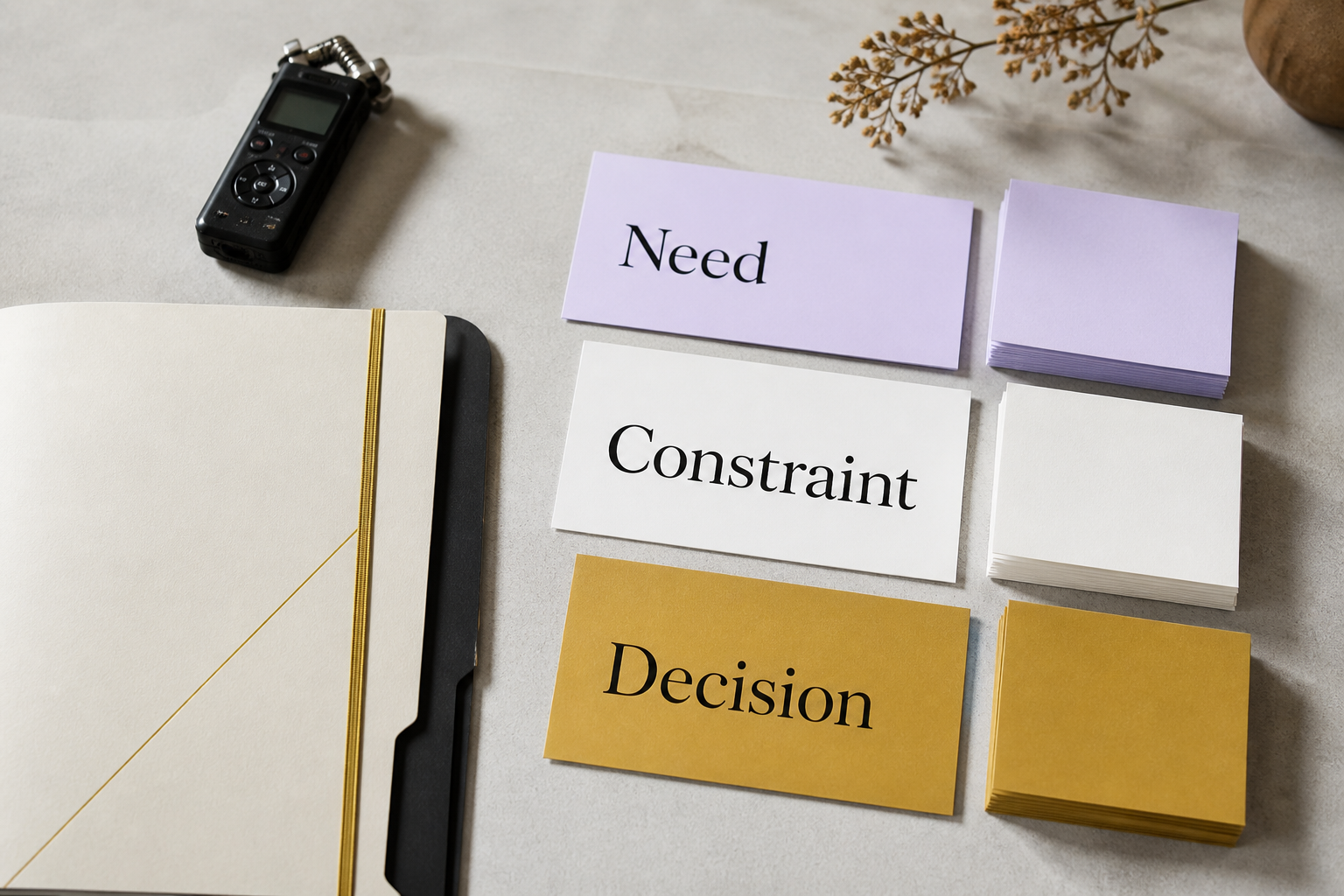
A persona document can look polished and still be useless. It may give an imaginary customer a name, a favorite coffee and a precise age, while saying nothing about why someone buys or what makes them hesitate.
Developing buyer personas should help you make better decisions about content, offers and customer experience. AI makes it easier to organize research. It also makes it easier to invent a convincing customer who has never existed. Keep those two activities separate.
Begin with a buying situation
Choose a decision your business needs to understand. That could be why someone replaces a supplier, books a first appointment or abandons a purchase. The useful unit of research is the situation surrounding that decision.
A business buyer facing an urgent equipment failure may behave differently from the same person planning next year’s budget. Their age and job title have not changed. Their priorities, available time and tolerance for uncertainty have.
Write the question you want the persona to answer before collecting facts. If a detail will not change your message, channel or service process, consider whether it belongs in the profile.
Collect evidence from more than one source
Interview recent customers about an actual decision. Ask what happened before they started looking, which options they considered, what nearly stopped them and what information helped. Let them describe the sequence in their own words.
Compare those accounts with inquiry forms, support questions, lost opportunities and website behavior. Include people who did not buy when you can learn from them appropriately. Research limited to happy customers can hide the reasons other people leave.
Keep permission and privacy in view. Remove unnecessary names, contact information and sensitive details from working notes. Preserve the connection to the underlying record in a controlled location so evidence remains checkable.
Use AI to sort research without creating facts
Source-grounded research tools can help compare interviews and organize recurring themes. Google announced the Gemini Notebook name for the former NotebookLM in July 2026, alongside expanded analysis capabilities. Access depends on plan and rollout.
The practical benefit is working from an identified set of materials instead of asking a general model to imagine your ideal customer. Google’s research update describes additional source-based outputs and analysis. Treat generated profiles and charts as drafts requiring verification.
Give each research note an identifier. Ask AI to group purchase triggers, objections and needed proof, citing the relevant identifiers. Require an “unknown” answer where evidence is missing. Then inspect every theme against the records, especially claims based on one unusual comment.
Build a short profile that changes the work
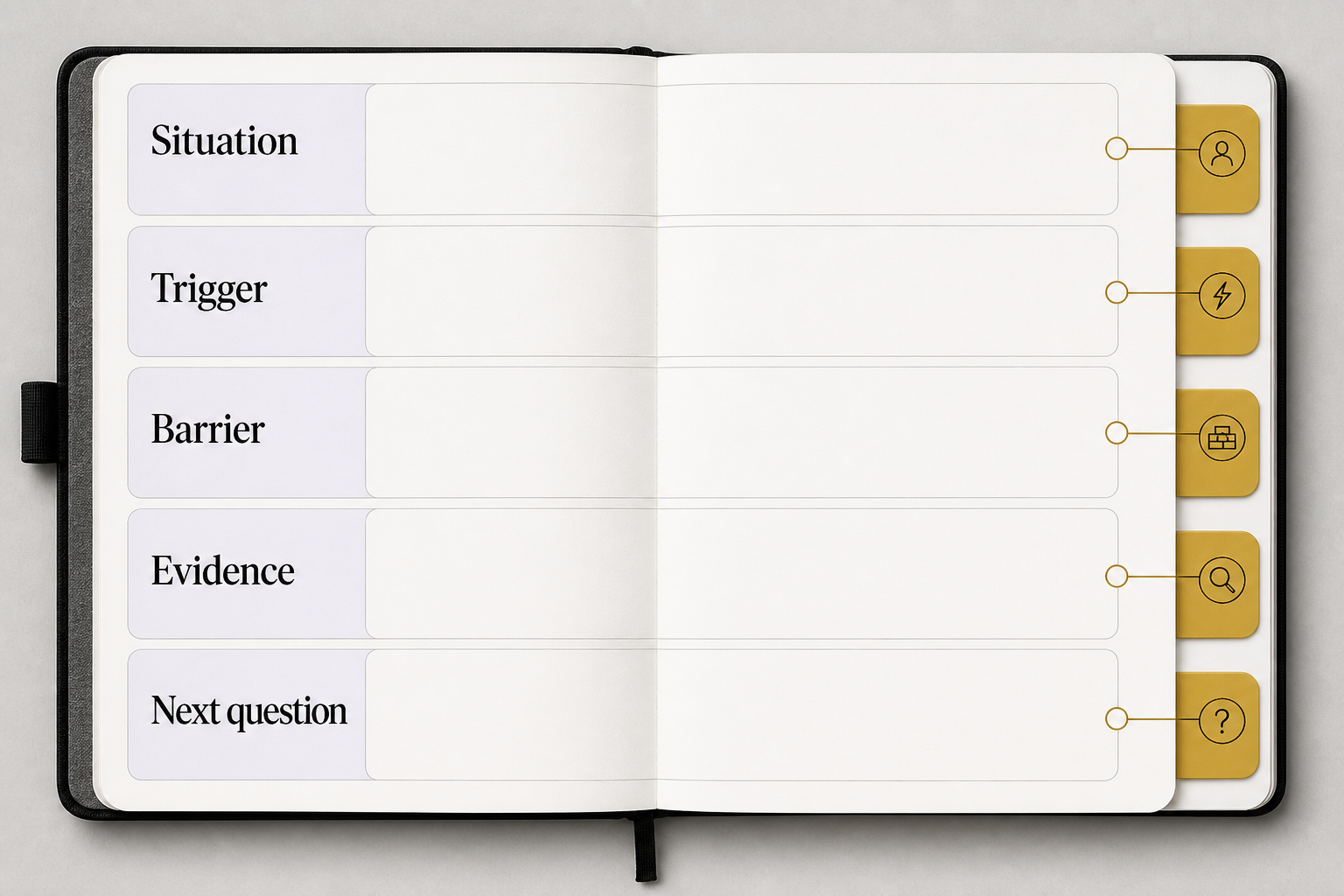
A practical persona can fit on one page. Include these fields:
- The situation that starts the search.
- The outcome the person wants.
- The constraints that affect the decision.
- The alternatives they consider.
- The questions and objections they raise.
- The proof they need before taking action.
- The channels they actually use to investigate.
- The situations your offer does not suit.
Mark each item as observed, inferred or unverified. Include a research date and source references. Do not turn a plausible inference into an interview quote or a market-wide percentage.
Apply the persona to a concrete example
Consider a hypothetical commercial cleaning provider researching office managers. Interviews might reveal that a change of provider follows missed visits and unclear issue reporting. That finding would matter more than a fictional description of the manager’s hobbies.
The resulting content could explain scheduling, escalation and how a new location is assessed. The inquiry form could ask about premises and current needs. The sales conversation could clarify service requirements before discussing an arrangement. These are proposed applications, not reported research findings.
A different segment opening its first office may need help defining the work itself. Separate those situations if they require meaningfully different guidance. Do not create extra personas merely to fill a presentation.
Validate through conversations and behavior
Use the profile to draft a page or interview guide, then test whether it answers real questions. Ask customers what is missing. Review whether suitable inquiries increase and whether repeated misunderstandings decline. A model pretending to be a customer can help rehearse a question, but its reaction is not customer validation.
Revisit the profile when the service, market or buying process changes. Keep contrary evidence instead of deleting it to preserve the story. Useful personas improve as they encounter reality.
If your marketing sounds broad because the buyer’s decision is still unclear, start with an Eastmoor Digital discovery call.
Sources & further reading
Primary references checked for this refresh. Availability and platform behavior may change.
- Google: NotebookLM is now Gemini NotebookChecked 2026-08-31
- Google: Do your best research with NotebookLMChecked 2026-08-31