

Launching a blog is easy compared with keeping it useful. The first few articles create momentum. Then products change, links break and the next topic becomes a weekly scramble.
A better launch plan starts with the questions your business is equipped to answer and the time you can commit to maintaining those answers. AI can reduce some drafting work, but it does not remove editorial responsibility.
Choose the business purpose
Decide who the blog serves and which decisions it supports. A service business may need guides that help customers prepare for an inquiry. A product business may need comparisons, setup help and care instructions.
Write down what success would look like beyond more posts: better-qualified inquiries, fewer repeated misunderstandings or more use of a helpful resource. These are objectives to measure, not outcomes to promise.
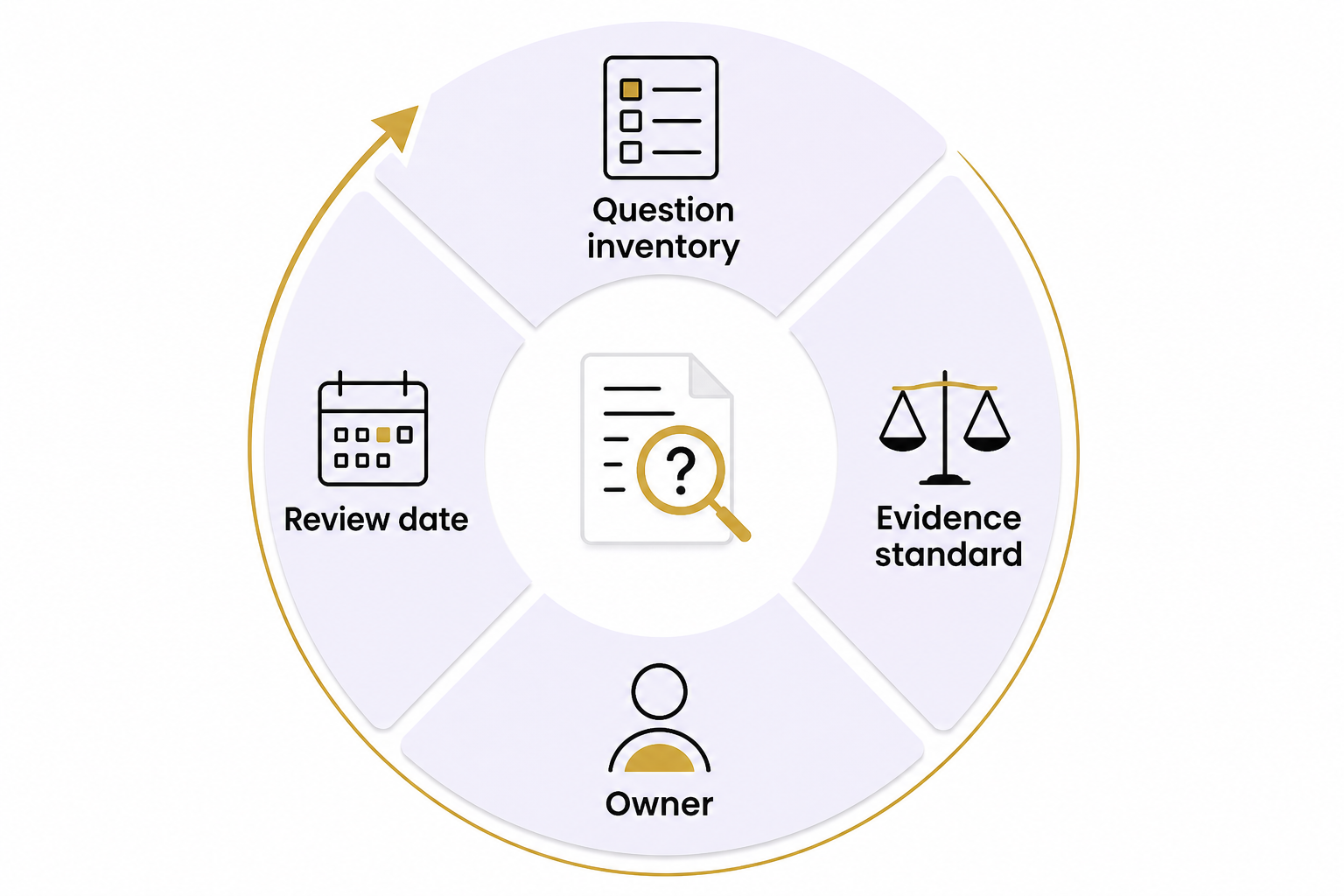
Build a small question inventory
Collect recurring customer questions, search observations and gaps in current pages. Remove duplicates. Group topics by the reader’s task rather than every possible keyword variation.
Give each planned article a distinct role. A blog launch guide covers planning and operations. A writing guide covers one article. A quality checklist helps evaluate the result. Overlap is natural, but each page should add something different.
Plan the publishing structure
Use stable, descriptive URLs. Choose a few understandable categories and make the blog index easy to browse. Link articles to relevant service explanations and other useful answers.
Prepare an article template with readable text, headings, accurate authorship, sources and a sensible next step. Test it with both a short title and a long one. Verify mobile navigation and image behavior before filling the library.
Set an evidence standard
Every brief should identify the question, required answers, supporting sources and the business knowledge it needs. Google’s helpful-content guidance rejects the idea that a preferred word count or cosmetic freshness creates quality.
Do not publish a fabricated case study just because original experience would make the article stronger. Use a clear hypothetical example when appropriate, or choose a topic you can support honestly.
Give AI a defined role
Useful assignments include organizing approved notes, suggesting headlines, identifying unclear passages and checking an outline for missing steps. Keep source verification and final approval explicit.
Google’s AI-content guidance cautions against producing pages at scale without added value. Set your publishing pace by the quality of the work you can review, not the number of drafts a tool can generate.
For a hypothetical first month, you might prepare one core guide and several genuinely distinct supporting answers. The number is a capacity decision, not an SEO requirement. Leave room to fix the first pieces after real readers encounter them.
Make ownership visible
For each article, record who owns its accuracy, the last substantive review and what would trigger another review. Product changes, new policies and changed service details deserve attention sooner than an arbitrary annual date.
Keep a simple status flow: planned, researched, drafted, fact-checked, approved, published and due for review. A draft should not become public merely because an automation completed its writing step.
Promote useful answers and learn from response
Share articles where the intended audience already asks the question. Adapt the introduction for each channel and link to the relevant answer. Do not distribute identical promotional captions everywhere by default.
Review search visibility, useful next-page actions and actual customer feedback. Distinguish traffic from inquiries and inquiries from sales. If an article attracts the wrong audience, revisit the topic and promise before producing more of the same.
A sustainable blog is a maintained body of useful answers. Book a discovery call with Eastmoor Digital to plan the topics, workflow and reading experience together.
Sources & further reading
Primary references checked for this refresh. Availability and platform behavior may change.
- Google: Helpful, reliable contentChecked 2026-08-31
- Google: Generative AI content guidanceChecked 2026-08-31