

Two customers belong to the same generation. One is selecting equipment for a growing business. The other is comparing a purchase for a small apartment. A campaign built around their shared label may miss almost everything that matters to either decision.
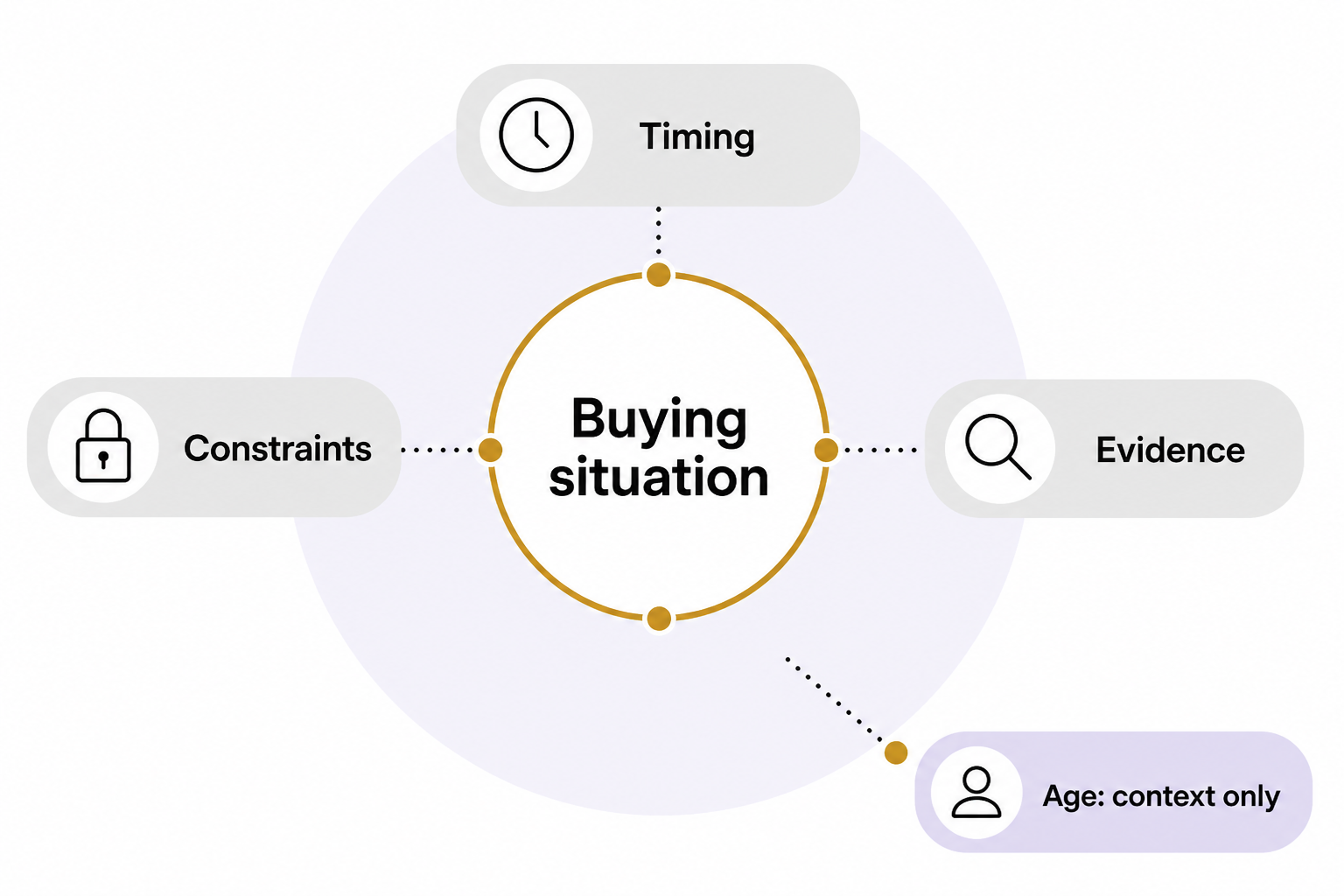
Marketing to millennials can be useful shorthand for an audience discussion, but it is not a complete strategy. Start with the situation people face, the outcome they want and the evidence they need. AI should help organize those details, not invent a personality for an entire generation.
Use age as context, not an explanation for everything
Pew Research Center warns against oversimplified generational analysis and emphasizes differences within generations and the importance of life stage. A behavior observed among one group is not automatically caused by its birth years.
For a business, the practical question is whether the distinction changes the work. Does it affect service needs, buying constraints, communication preferences or the information required to decide? If not, the label may be less useful than a more specific segment.
Avoid copy that assumes every millennial values the same causes, uses the same apps or prefers experiences over products. Those claims can make a business sound less informed about actual customers.
Research real purchase decisions
Ask customers what started the search, which options they considered and what nearly stopped them. Focus on an actual recent decision rather than a broad question about their lifestyle.
Compare interview notes with inquiries, lost opportunities and support questions. Look for patterns in the work people need done. Where age is relevant, use information collected appropriately rather than guessing it from a name or photograph.
Keep observations, interpretations and unanswered questions separate. A small set of conversations can guide a test without being presented as a representative study.
Let AI organize evidence without inventing a segment
Source-grounded tools can help identify recurring questions across approved notes. Google’s Gemini Notebook, renamed from NotebookLM in July 2026, is one example of that direction in AI research.
Give each note a source identifier and ask the assistant to cite it when suggesting a theme. Tell it to mark missing information as unknown. Review whether a supposed pattern is supported by several records or merely repeated language in one conversation.
Do not use synthetic personas as a replacement for talking with customers. An AI model can help rehearse an interview, but its answers are not evidence of millennial preferences. Remove unnecessary personal information before using research materials in any external tool.
Make the next step convenient for the situation
Convenience should follow the task. Someone comparing options may need clear specifications and a saved guide. Someone ready to inquire may need a short mobile form and a clear explanation of follow-up. Someone making a repeat purchase may need an easy way to find the right item again.
Test your website on a phone, including labels, errors, links and confirmation messages. Do not call a process convenient simply because it looks modern. Complete the actual task and note where effort or uncertainty increases.
Offer appropriate communication choices without assuming everyone wants a chatbot or a phone call. If you use an assistant, make its scope clear and provide a way to reach a person when it cannot help.
Demonstrate trust with specific evidence
Explain how the service works, what is included and what information a customer needs before proceeding. Use genuine examples with permission. Make business policies easy to find and keep time-sensitive statements current.
AI can improve a draft, but it must not manufacture customer praise. The FTC’s review and testimonial guidance addresses fake or false customer evidence. A generated face and invented story are not an acceptable substitute for a real account.
If the business supports a cause or uses a particular sourcing practice, describe the actual activity and its limits. Do not infer values from an audience label and then invent a brand story to match.
Build a test around a meaningful difference
Consider a hypothetical furniture retailer serving apartment residents. Research might suggest that delivery access and product dimensions matter more than trend language. A useful test would compare a room-fit guide with a generic style post, directing both to relevant product information.
That is a planning example, not a research finding. The business would still need to observe whether people use the guide, ask better questions or complete suitable purchases. It should not claim that the outcome explains all millennial consumers.
Keep refining the audience definition
Review the questions and objections that arise after each campaign. Update the segment when evidence changes. Measure useful engagement and customer outcomes, including confusion and opt-outs, rather than relying on flattering audience assumptions.
To build a marketing plan around real buying decisions, start with an Eastmoor Digital discovery call.
Sources & further reading
Primary references checked for this refresh. Availability and platform behavior may change.
- Pew Research Center: Reporting on generationsChecked 2026-08-31
- Google: NotebookLM is now Gemini NotebookChecked 2026-08-31
- FTC Consumer Reviews and Testimonials Rule Q&AChecked 2026-08-31