

Someone watches your Instagram video and likes what they see. Then they open your profile and cannot tell whether you serve their area, sell the product shown or accept inquiries. The content earned attention, but the business information lost the next step.
Instagram for business works better when the profile, posts and destination answer one connected set of questions. AI can assist editing and translation. It cannot supply the real examples and accurate details that make a business worth considering.
Make the profile useful before adding more posts
Use a recognizable name and image. Explain what the business offers, who it helps and any important location limits. Choose links that lead to current, relevant pages rather than an unmaintained collection of destinations.
Review the professional-account options available in your app. Contact tools, commerce features and analytics can vary by account and region. Confirm eligibility instead of building a plan around an old tutorial or an assumed feature.
Open the profile from a phone as a potential customer. Check the contact path, website loading and whether old highlighted information contradicts current services.
Choose content by the question it answers
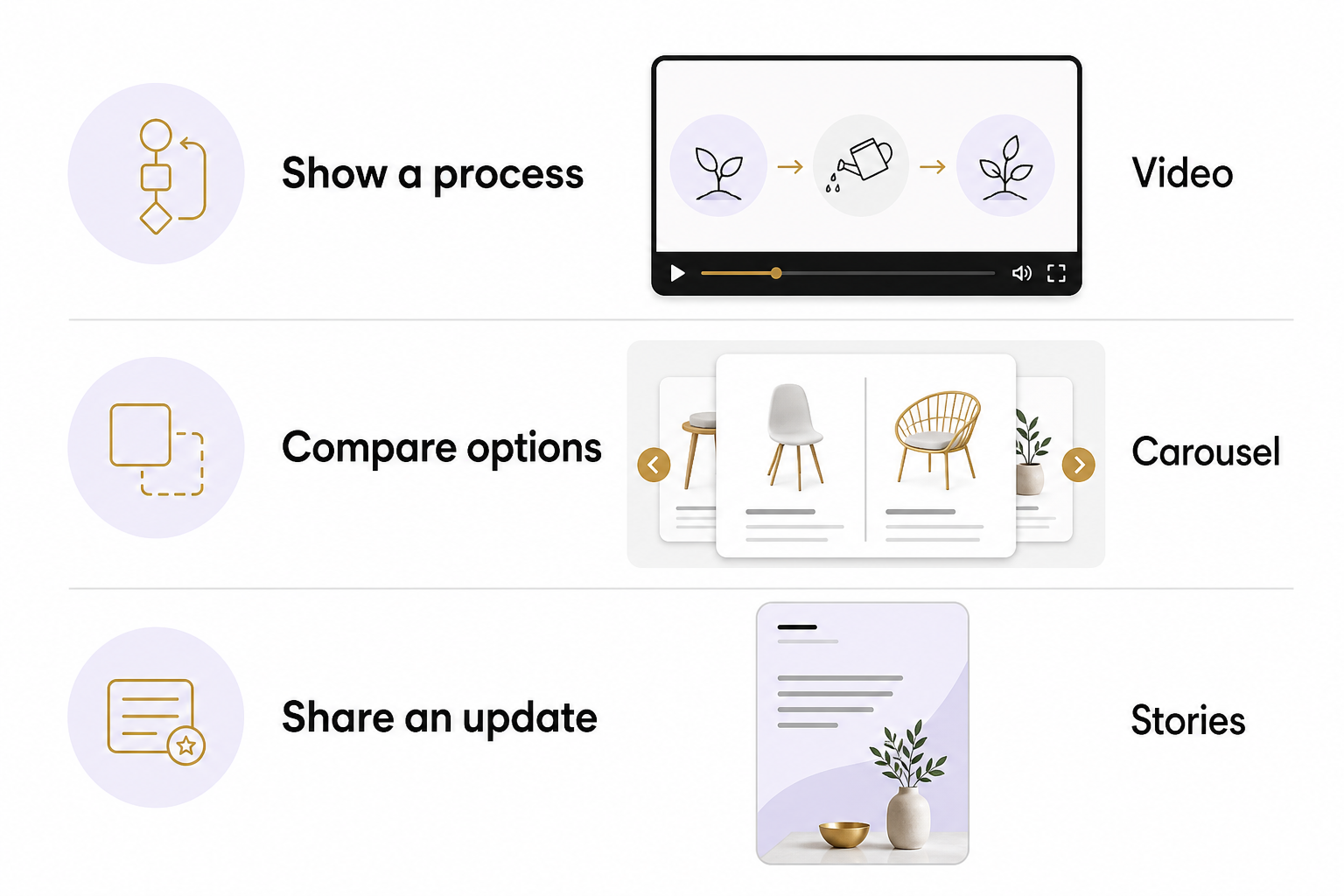
Use a demonstration when a process is easier to show than explain. Use a carousel when the reader needs to compare options or follow a sequence. Use Stories for relevant updates and lightweight conversation. The format should serve the subject.
A hypothetical pottery studio could show how a beginner class works, explain what participants should bring and answer questions about collection after firing. That gives a prospective visitor more useful information than a stream of unrelated trends.
Keep the first frame specific. Tell viewers what they are about to learn or see. Add accurate captions and readable text so the meaning does not depend entirely on sound.
Protect the value of original evidence
Meta’s 2026 update discusses recommendation changes and original content. The practical response is to build around your actual work, knowledge and materials rather than copy someone else’s post format without contributing anything.
Real demonstrations also create a useful source for AI assistance. From an approved recording, an assistant can suggest a shorter script, caption or set of questions for a follow-up post. Verify that the edited version preserves the original meaning.
Keep permission records for customer images. Do not turn an AI-generated room, product or event into apparent evidence of work you completed. Visual accuracy matters as much as written accuracy.
Use translation where you can support the audience
Meta documents AI translation, dubbing and lip sync for Reels, with additional Instagram languages announced in July 2026. Check current availability and controls in the account rather than assuming every language and feature is present.
Translation can help people understand useful content. It can also misstate a product name, qualification or local service detail. Have important translations reviewed by someone competent in the language before relying on them for business information.
Consider the full experience. If a video attracts inquiries in another language, can the business respond and provide the promised service? Extending reach without that support can create confusion instead of opportunity.
Use AI visuals without misrepresenting the offer
AI can help explore a layout or improve production efficiency. Inspect generated hands, lettering, product proportions and backgrounds. Keep essential text editable so mistakes are easy to correct.
For paid creative, review the platform’s transparency requirements. Meta explains AI information labels for generated or significantly edited ads. Labeling and truthfulness are separate responsibilities: an identified AI image still should not promise an unavailable product.
Do not use synthetic testimonials or manufactured before-and-after images as customer proof. A clearly labeled concept can explain an idea; it cannot establish a result.
Give interested viewers a reasonable next step
Match the action to the content. A class demonstration can lead to the class information page. A product comparison can lead to the relevant collection. An educational post may simply invite a useful question.
Monitor messages and comments consistently. Use AI for draft assistance if appropriate, but review replies that involve availability, prices or unusual requests. Avoid automated messages to people who have not asked to be contacted.
Review outcomes, not just attractive posts
Compare relevant profile actions, website visits, inquiries and purchases with production effort. Inspect saves and shares as clues about usefulness, not automatic proof of commercial value. Different formats serve different jobs, so avoid judging every post by the same metric.
Keep a note of the question each post answered and the response it produced. Repeat the useful subjects with new substance, not identical captions. To build that content system, book a discovery call with Eastmoor Digital.
Sources & further reading
Primary references checked for this refresh. Availability and platform behavior may change.
- Meta AI translation for ReelsChecked 2026-08-31
- Meta: 2026 AI Drives PerformanceChecked 2026-08-31
- Meta generative AI ad transparencyChecked 2026-08-31