
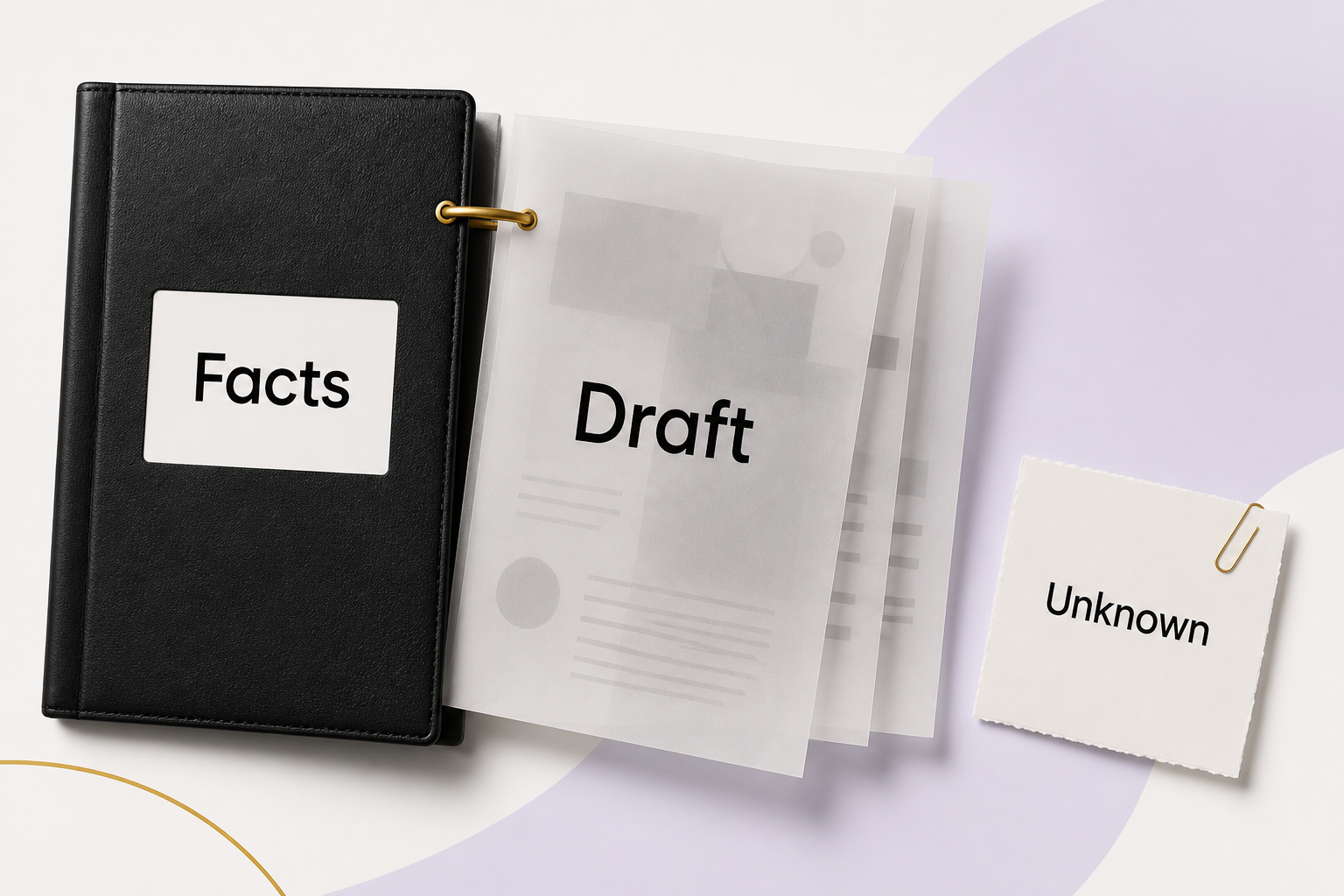
The hardest part of business writing is often deciding what you can honestly say. An AI assistant can produce sentences quickly, but it does not know your current services, delivery limits or customer experience unless you provide reliable information.
Begin with a fact sheet, not a blank prompt. The goal is to help a reader act with a correct understanding of the business.
Choose one reader and one job
Who will read this, and what do they need to do next? A service page helps someone evaluate an offer. A guide teaches a task. An email may explain one change or invite one response. They should not all use the same structure.
Write a one-sentence brief with the audience, problem and desired outcome. Add what the piece will not cover. That boundary keeps a draft from expanding into a general lecture.
Create an approved fact sheet
List service details, supported locations, process steps, contact destinations and any approved evidence. Mark unknowns clearly. Keep prices, guarantees, timelines and contractual terms out unless the business has approved the exact wording.
For each factual claim, retain a source or an accountable owner. “We reply within an hour” needs an actual service commitment. “Our system can connect to every platform” needs verification and is often too broad to support.
Give the assistant a constrained assignment
Provide the brief, fact sheet and a short sample of approved writing. Ask for a draft that uses only those facts, identifies missing information and avoids invented quotes or results. Specify the reading level and the task the reader should be able to complete.
Google’s guidance on AI-generated content calls for accuracy, quality and relevance. Treat the model as a drafting tool, not as evidence for claims about your business.
Do not upload sensitive customer records to an unapproved system. A sanitized description of a recurring question may be enough to guide the writing.
Build the explanation in a useful order
State the problem or answer first. Explain why it matters, then give the steps, tradeoffs or evidence the reader needs. Finish with a relevant next action.
Consider a hypothetical page about website maintenance. Instead of opening with “Our comprehensive solutions keep your business ahead,” explain which tasks are handled, which remain with the customer and how changes are requested. Every detail must match the actual service.
Write headings that reveal the structure. “What happens after you submit a request?” is more useful than “Our commitment to excellence.”
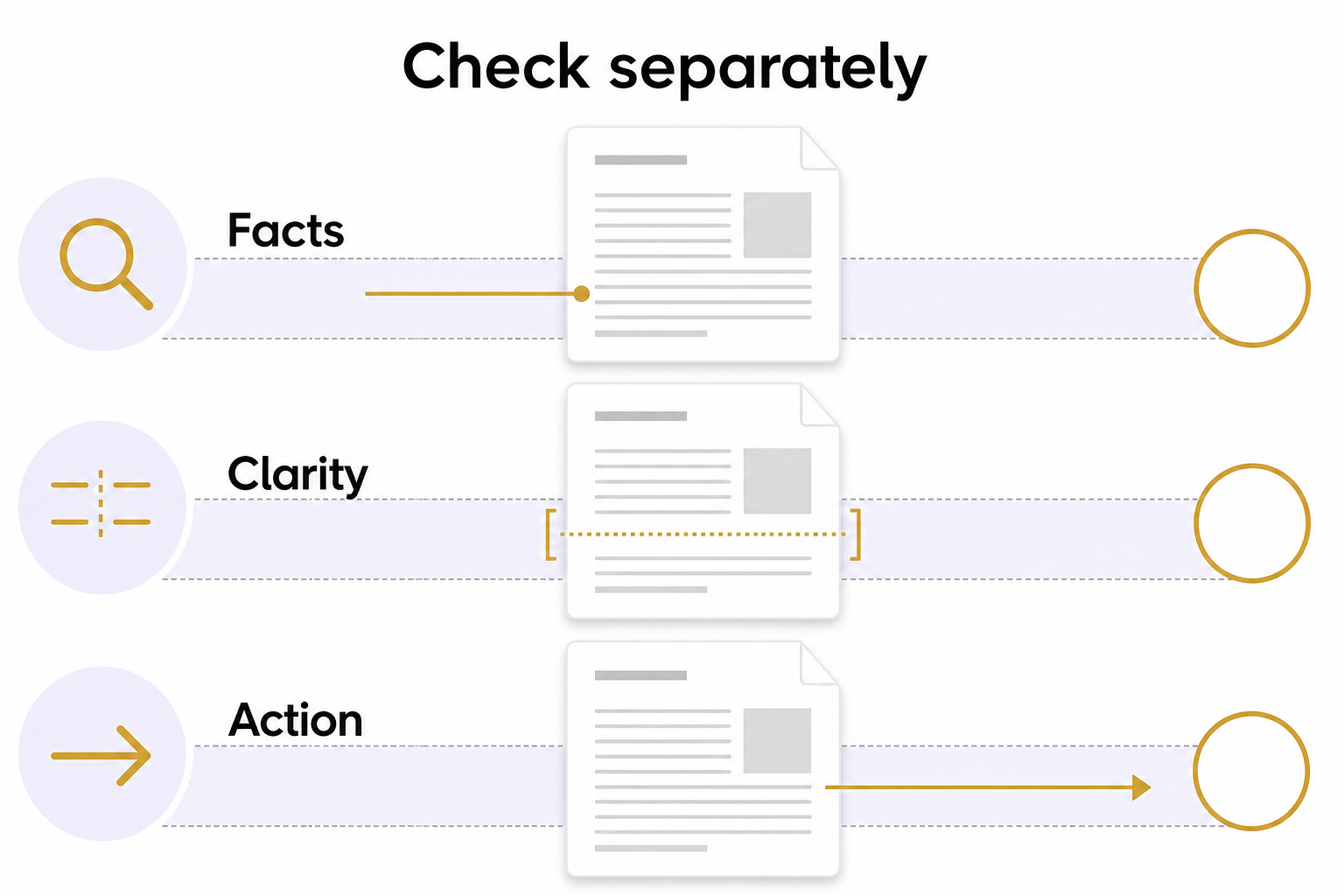
Run separate editing passes
- Truth: Verify names, dates, features, numbers and service claims.
- Meaning: Check that the draft does not turn a possibility into a promise.
- Usefulness: Add missing steps and remove repeated points.
- Voice: Replace inflated language with words the business would actually say.
- Presentation: Review headings, links, images and mobile readability.
Keeping these passes separate helps prevent a fluent rewrite from hiding a factual change. Save the approved fact sheet alongside the draft for future revisions.
Adapt the message to the destination
A web page can carry background and supporting links. A short email needs a tighter focus. A social post may use one example rather than the entire explanation. Preserve the facts while changing the presentation.
Do not make a stronger claim in a headline, caption or meta description than the article supports. Short fields still require review.
Publish with ownership and a review date
Record who approved the content and what could make it outdated. A platform tutorial may need review after a product change. A service page needs review when the offer or delivery process changes.
Content stays useful when someone owns its accuracy. Book a discovery call with Eastmoor Digital to build a writing process grounded in your actual business.
Sources & further reading
Primary references checked for this refresh. Availability and platform behavior may change.
- Google: Generative AI content guidanceChecked 2026-08-31