

A lead form can be easy to complete and still create a poor sales conversation. Someone taps an ad, submits their details and then receives a call about an offer they barely understood. The business sees a lead. The person sees an interruption.
Facebook lead ads can reduce the steps between interest and inquiry. Their value depends on what you ask, what you promise and how you follow up. AI optimization can assist delivery, but it needs a business process that distinguishes a contact record from a real opportunity.
Choose the action you actually want
Decide whether the campaign should collect requests for an estimate, event registrations or permission to send a resource. Those actions require different expectations and different follow-up. Do not describe a newsletter signup as a ready-to-buy customer.
For a hypothetical home-organizing service, the ad might offer an initial project inquiry. It should explain the type of work and service area before the form opens. That gives the person enough context to decide whether submitting is useful.
Write down what makes an inquiry suitable. Keep the criteria practical: requested service, location, timing and any essential project conditions.
Understand what automation is optimizing
Meta announced Advantage+ lead campaigns using AI optimization. Account interfaces, available settings and measurement options can differ. Inspect the actual campaign configuration rather than assuming a feature name describes every control.
If the system receives only form-submission feedback, your definition of success may remain shallow. Where appropriate and supported, investigate how qualified outcomes from the CRM can inform measurement and optimization. That requires correct setup, permission and event definitions.
A platform’s prediction is not a guarantee that every contact is suitable. Nor does choosing a lead objective necessarily mean the business is billed only when a lead arrives. Review billing and bidding terms in the account before launch.
Make the creative qualify attention honestly
Show the actual service or a clearly identified illustration. State the relevant area and explain the next step. Avoid sensational results or an offer that sounds broader than the business can deliver.
AI can draft alternate headlines from approved service information. Review each version for invented prices, deadlines and eligibility. A more dramatic sentence is not an improvement if it attracts the wrong expectation.
Meta describes AI information labels for generated or significantly edited ad creative. Review both applicable labeling and accuracy. A synthetic room makeover should not be presented as a completed customer project.
Design a form that supports the next conversation
Keep fields purposeful. Contact details may be necessary, while a short question about the requested work can help set context. Do not collect sensitive information merely because the form allows another field.
Explain who will contact the person and why. Include the required privacy information and obtain appropriate permission for the intended channels. A request for one resource does not automatically authorize unrelated promotional sequences.
Where review or confirmation options are available, consider whether they help the person make a deliberate choice. More friction is not always bad, and fewer fields are not always better. Evaluate suitability and completion together.
Test the handoff before buying traffic
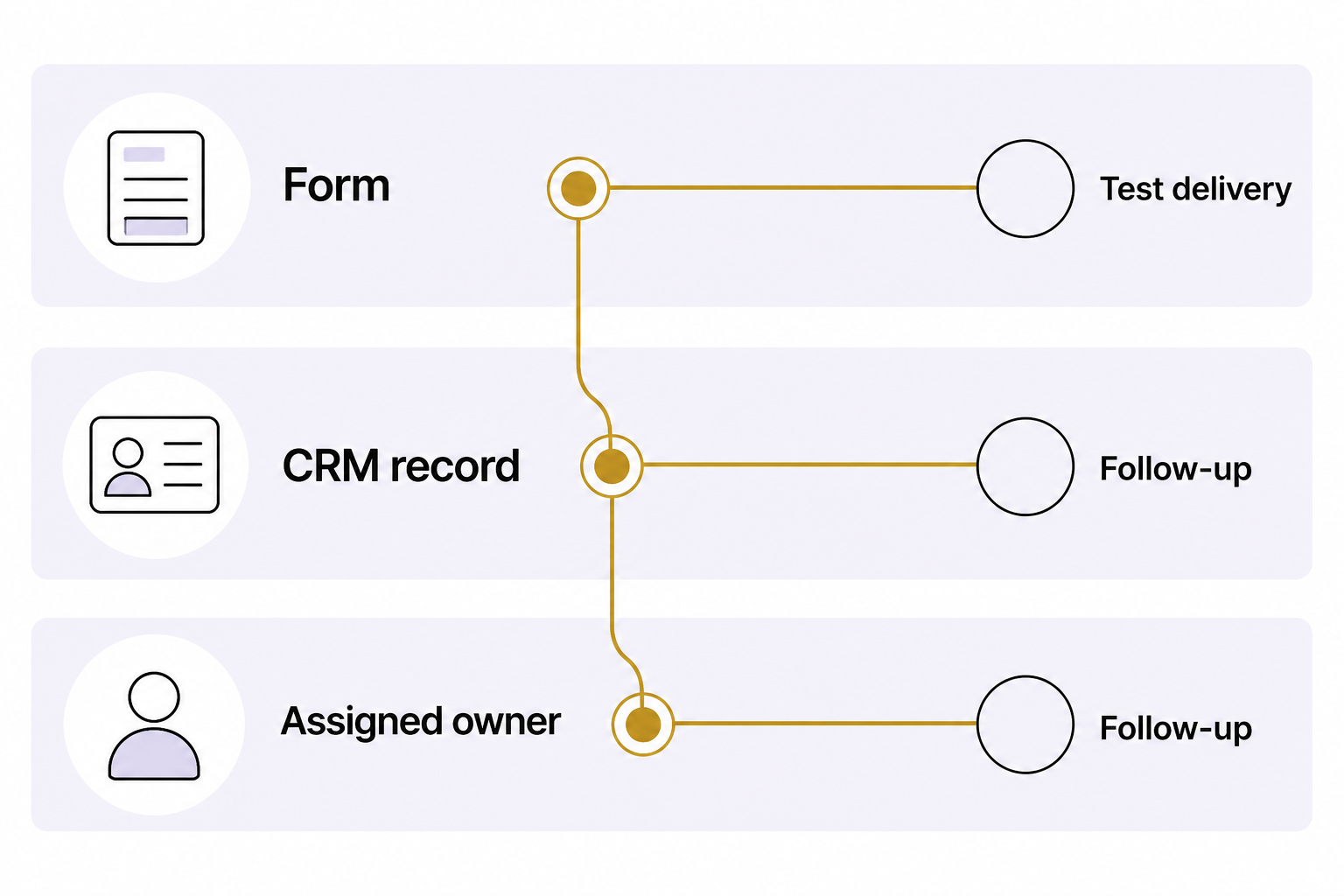
Submit a test lead and follow it through the entire process. Confirm the campaign source, field mapping, timestamps, assigned owner and notification. Check for duplicate records and missing permission fields.
Test what happens if the integration is unavailable. Someone needs to know when records stop arriving. A successful ad report does not prove the CRM received every inquiry.
Create a follow-up message that references the actual request and explains the next step. Do not promise an appointment or price until it has been confirmed. Keep an easy way to correct information or stop contact.
Use AI to assist the response, not invent it
An assistant can summarize the inquiry, suggest a category and draft a reply from approved business facts. Keep the original submission visible so a person can detect a mistaken interpretation.
Require review for unusual requests, sensitive information and commercial commitments. Do not let the model fill empty fields with guesses. If the inquiry lacks essential information, ask for it clearly.
Judge the campaign after the form submission
Track contacted leads, suitable opportunities, appointments that occur and customers. Review disqualification reasons and follow-up workload alongside cost per lead. A cheaper campaign that produces mostly unsuitable records may create more cost elsewhere.
Compare meaningful periods and allow for the normal buying cycle. Change the offer, form or audience hypothesis based on evidence, keeping a record of what changed. To build that process, start with an Eastmoor Digital discovery call.
Sources & further reading
Primary references checked for this refresh. Availability and platform behavior may change.
- Meta: Advantage+ AI updates and lead campaignsChecked 2026-08-31
- Meta generative AI ad transparencyChecked 2026-08-31