
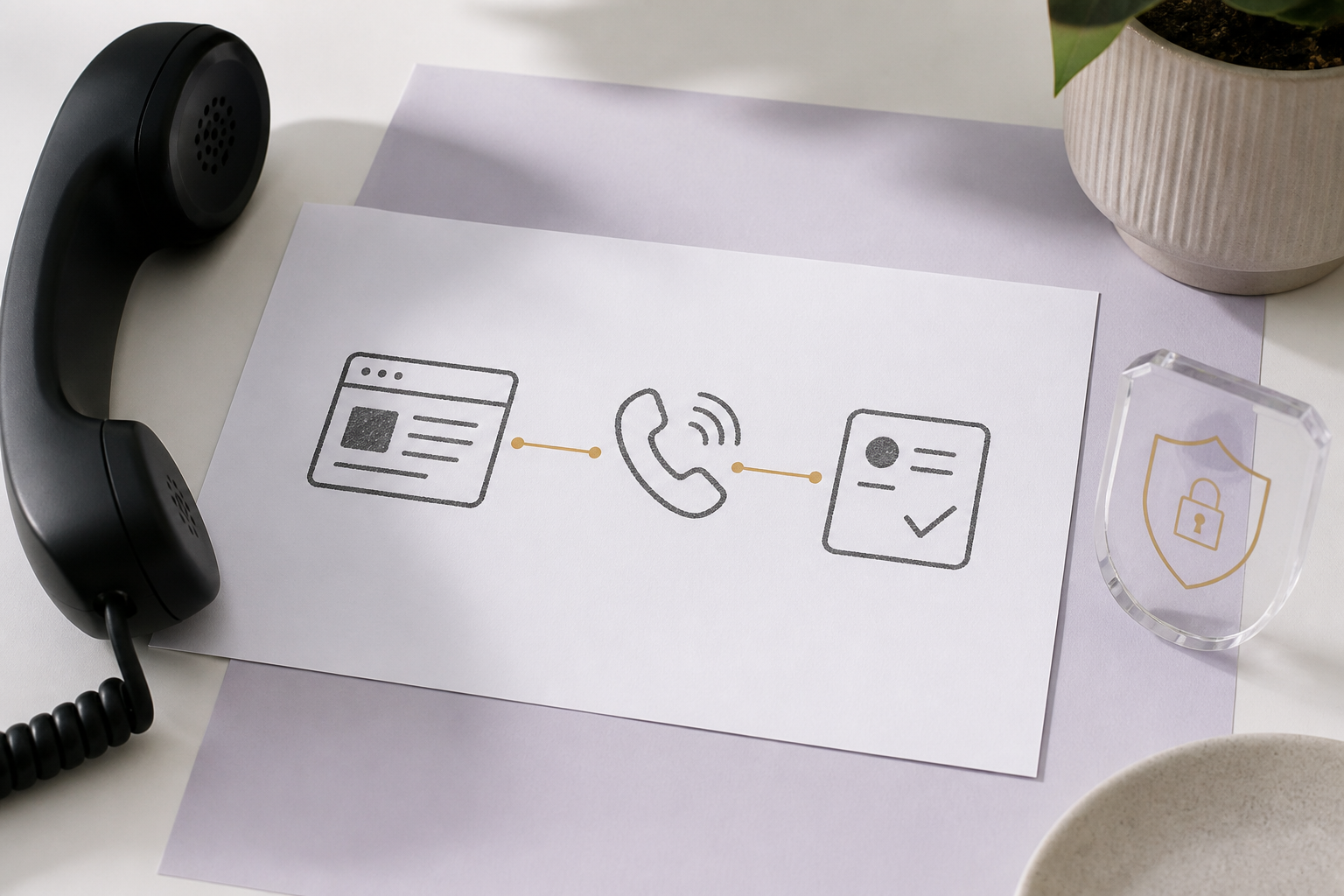
The phone rings after someone visits your website. You know a conversation happened. You may not know which campaign helped bring the caller, whether the call reached the right person or whether it became useful business.
Call tracking can connect some of those pieces. The setup needs to protect the customer experience first. A report is not worth much if a tracking number sends callers to the wrong place.
Define the outcome you want to measure
A phone-link click is an intention to call. A connected call is a conversation. A qualified lead is a caller with a relevant need. A booked appointment or won customer is a later outcome. Keep these separate.
Choose a definition that matches the decision. If you want to evaluate lead quality, call duration alone is not enough. A long call might be an existing customer asking for support; a short call might successfully book a repeat service.
Document who applies the outcome labels and how uncertain calls are handled. Include an unknown category instead of forcing a positive or negative judgment from incomplete information.
Choose the tracking approach
A dedicated number for a particular campaign can help identify its calls. Dynamic number insertion changes the number displayed to a website visitor based on the tracking setup. Session-level approaches require enough numbers and correct configuration to avoid confusing overlapping visits.
Ask a provider how source assignment works, what happens when numbers are unavailable and which situations remain unattributed. Review number ownership, portability, cancellation handling and the process for forwarding calls if you change providers.
Keep your underlying business number documented. Be deliberate about directory listings and printed materials: a number that disappears when a subscription ends can strand customers long after the campaign finishes.
Review recording and AI processing before enabling them
Call tracking, recording, transcription and AI analysis are distinct activities. You may be able to measure basic call routing without recording a conversation. Do not turn recording on merely because the product includes it.
Requirements depend on jurisdictions, participants, sector and the processing involved. Have qualified counsel review the intended notices, consent process, retention and access. This guide is an implementation framework, not a legal conclusion that a particular announcement is sufficient.
Consider what callers may disclose. Payment details, health information or other sensitive material can create risks beyond ordinary marketing measurement. Decide whether recording should be disabled, paused or routed differently for those conversations before collection starts.
Test the real calling experience
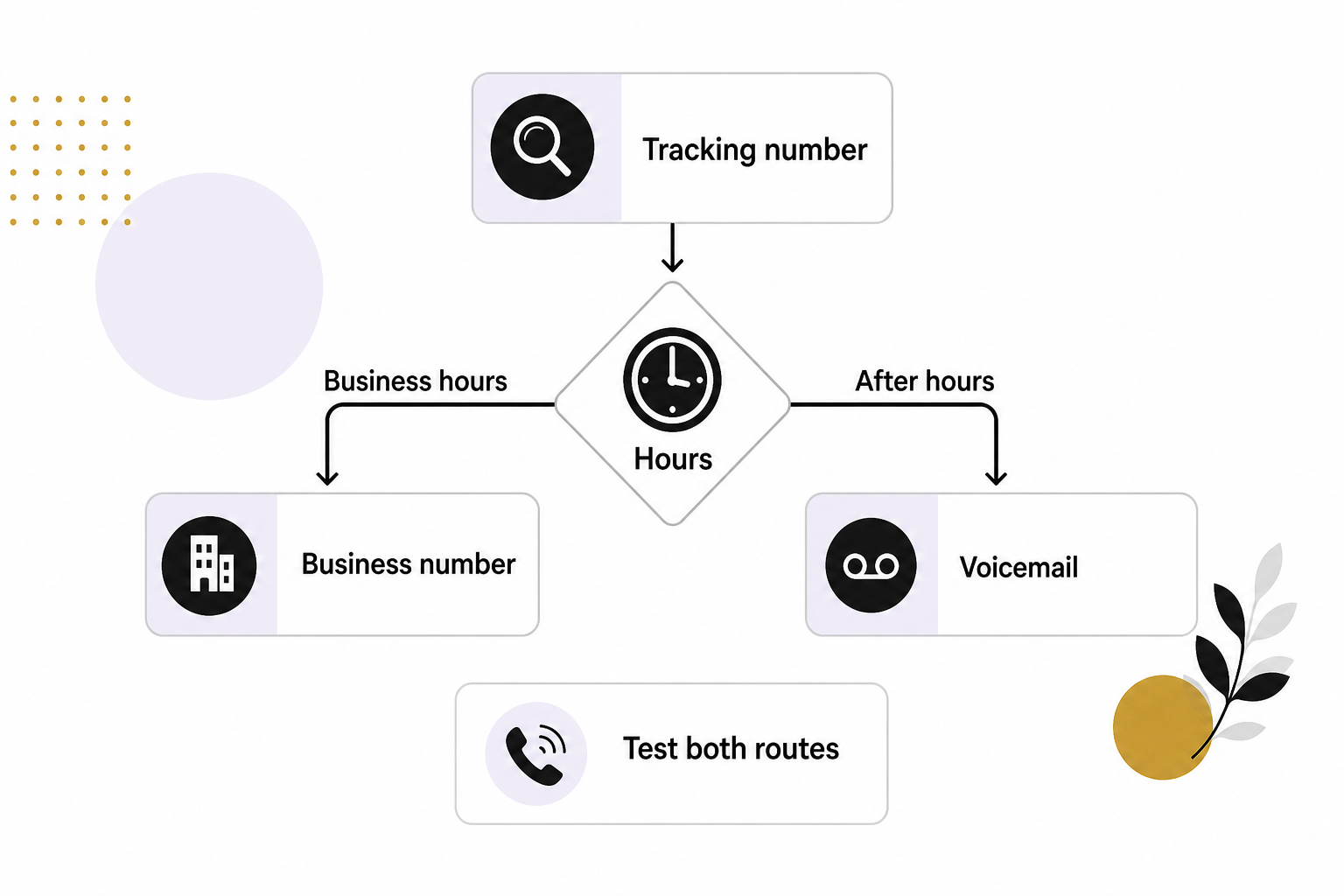
- Call the tracking number and confirm the intended destination.
- Test business hours, after-hours handling and voicemail.
- Check the visible number and the phone link on mobile.
- Test relevant campaign links, direct visits and returning visits.
- Confirm what happens when scripts are blocked or consent is declined.
- Check failover and the underlying number without the tracking script.
Keep test calls labeled so they do not inflate performance reports. Confirm the source and outcome in the destination system, not just the website preview. Re-test after changing a theme, consent banner, number pool or routing rule.
Use conversation AI as a review assistant
CallRail documents AI summaries, multi-conversation insights and self-reported attribution within its Premium Conversation Intelligence offering. Availability depends on the selected setup and product access. CallRail: Premium Conversation Intelligence
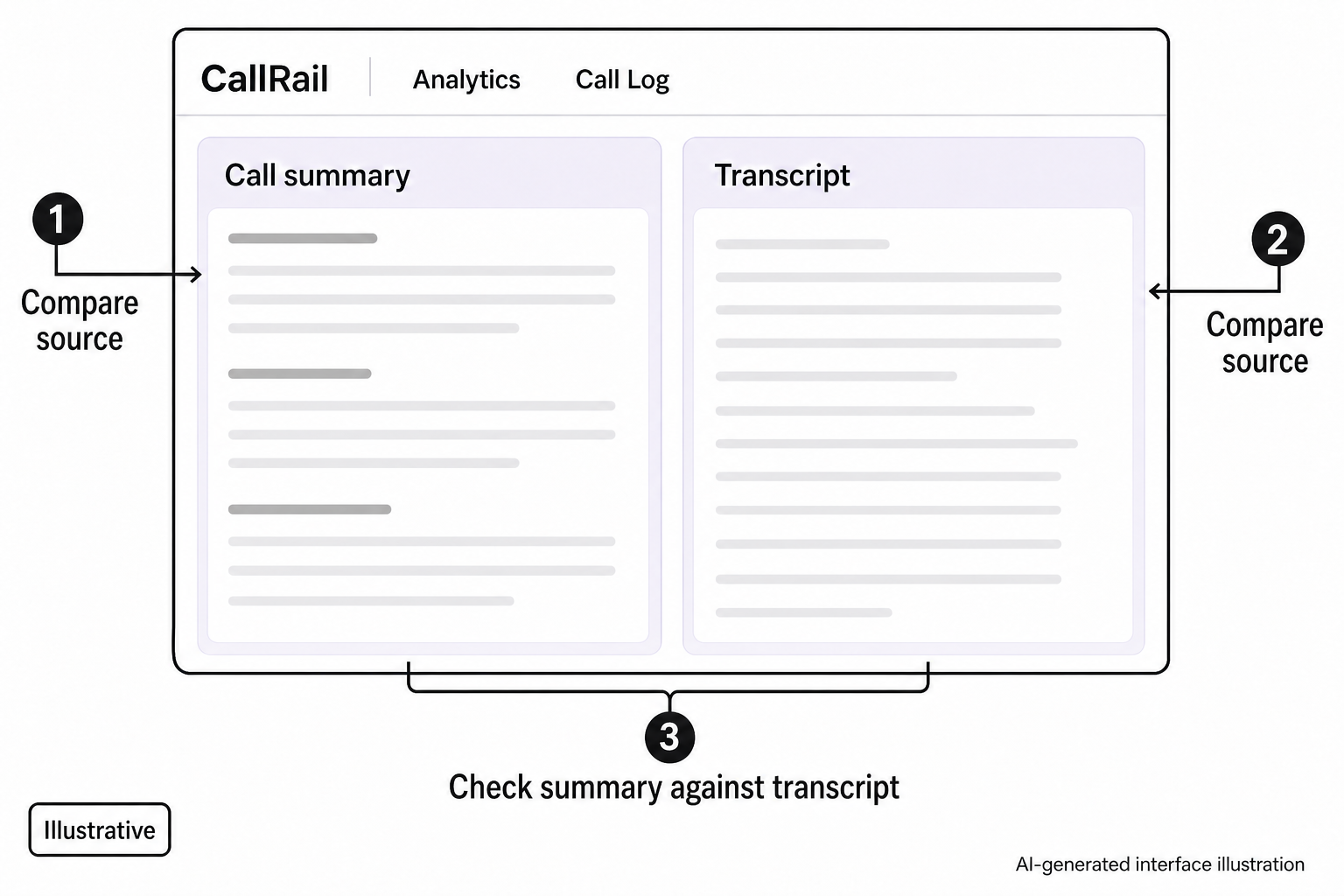
These features can help you find calls worth reviewing. They should not become unquestioned evidence. A transcript may miss a negation, confuse names or interpret a request for information as an appointment. Compare a sample of summaries and labels with the underlying conversation where you are authorized to review it.
Self-reported attribution is useful context, but a caller’s answer may describe the first discovery, the latest reminder or the easiest source to remember. Keep it separate from observed campaign attribution. Neither deserves to overwrite the other automatically.
A hypothetical example
A home-service business receives many calls from an ad campaign. AI labels several as strong leads because the conversations mention the advertised service. Manual review finds that some callers are outside the service area. The useful change is to improve geographic clarity and qualification, then check later calls.
Connect only appropriate data to analytics
Send the event information needed for reporting, not unrestricted transcripts or caller details. Google Analytics prohibits personally identifiable information in ordinary collection. Review the integration’s actual payload rather than trusting a setting called “privacy safe.” Google Analytics: Avoid sending personally identifiable information
Reconcile qualified calls with CRM outcomes and avoid counting the same caller repeatedly as new business. When a browser event and a server integration both report an outcome, verify the destination’s deduplication design.
Review source, qualified outcomes and missed-call handling together. If you want help mapping phone measurement to your marketing decisions, arrange an Eastmoor Digital discovery call.
Sources & further reading
Primary references checked for this refresh. Availability and platform behavior may change.
- CallRail: Premium Conversation IntelligenceChecked 2026-08-31
- Google Analytics: Avoid sending personally identifiable informationChecked 2026-08-31