

A subscriber signs up for a guide, receives it and then hears nothing for months. When the business finally emails again, the message is a promotion unrelated to the original interest. The list exists, but the relationship has no clear direction.
A useful small business email strategy connects the reason someone subscribed with the next question you can help answer. AI can assist with planning and drafting. It should not decide who has permission to receive a campaign or what your business is allowed to promise.
Choose one audience and one purpose
Start with a defined group: new subscribers interested in a service, recent buyers who need setup help or existing customers asking about maintenance. Those groups need different information.
Choose a purpose you can explain in one sentence. Help a new subscriber understand the process. Help a buyer use the product. Help a qualified prospect decide whether to speak with you. Avoid combining every business announcement into one email.
Use information people supplied or behavior you are appropriately allowed to use. A click is a signal of interest, not proof of a person’s private circumstances. Keep segmentation understandable and easy to correct.
Build a short sequence around real questions
A practical welcome sequence might deliver the requested resource, explain a common decision and offer a relevant next step. Each message should work on its own and move the reader forward without repeating the same pitch.
Write the exit rules before turning it on. Someone who completes the desired action may no longer need the remaining messages. Someone who unsubscribes should not re-enter through a different automation.
Set frequency according to the expectation you established and your ability to provide useful material. There is no universal best day or perfect number of emails for every business. Start with a manageable schedule and review actual responses.
Give AI approved facts and a narrow assignment
Create a source brief containing the audience, purpose, approved offer, exclusions and next step. Ask an assistant for several subject lines and a draft that uses only those facts. Require it to list unsupported claims rather than supplying them.
Use a second pass to check whether the subject accurately matches the body. Avoid fake replies, false urgency and personalization that suggests a relationship you do not have. A generated sentence about “your recent project” is inappropriate when no such project is documented.
Keep customer data out of unapproved tools. For personalization, use approved fields with sensible fallbacks. Test what happens when a first name is missing, a product field is blank or a record belongs to the wrong segment.
Check delivery before judging copy
Authentication and sender reputation affect whether the message reaches the reader. Gmail’s requirements include authentication, with additional requirements for bulk senders such as DMARC and one-click unsubscribe for applicable marketing messages. Check the rules for your sending volume and provider. Gmail: Email sender guidelines
Confirm the sending domain, reply destination and unsubscribe behavior with a test message. Ask the email provider or administrator to verify authentication; copying a DNS value without understanding existing records can create problems.
Keep marketing and operational messages appropriately separated. A person who opts out of promotions may still need a receipt, but that does not justify disguising promotions as transactional mail.
Review permission and message honesty
Use a permission-based list-building approach and document the source of subscriptions. Do not assume purchased contact information is permission to send. Requirements vary by jurisdiction and context.
The FTC’s CAN-SPAM guide covers accurate sender information, nondeceptive subjects, identification and opt-out obligations for commercial email. It is not a statement that every jurisdiction uses the same consent rule. Get qualified advice when your audience or campaign raises legal questions. FTC: CAN-SPAM compliance guide
Make unsubscribing easy and test suppression across connected systems. A link that looks correct in the email is not enough if the automation ignores the resulting preference.
A hypothetical example
A garden retailer offers a guide to choosing plants for shaded spaces. Its sequence delivers the guide, explains how to evaluate the planting area and then points to a relevant selection page. AI helps draft variations, but a knowledgeable reviewer checks plant suitability and removes unsupported promises.
The retailer does not automatically send the same sequence to every customer or treat a guide download as permission for unrelated offers.
Measure the action the email was meant to support
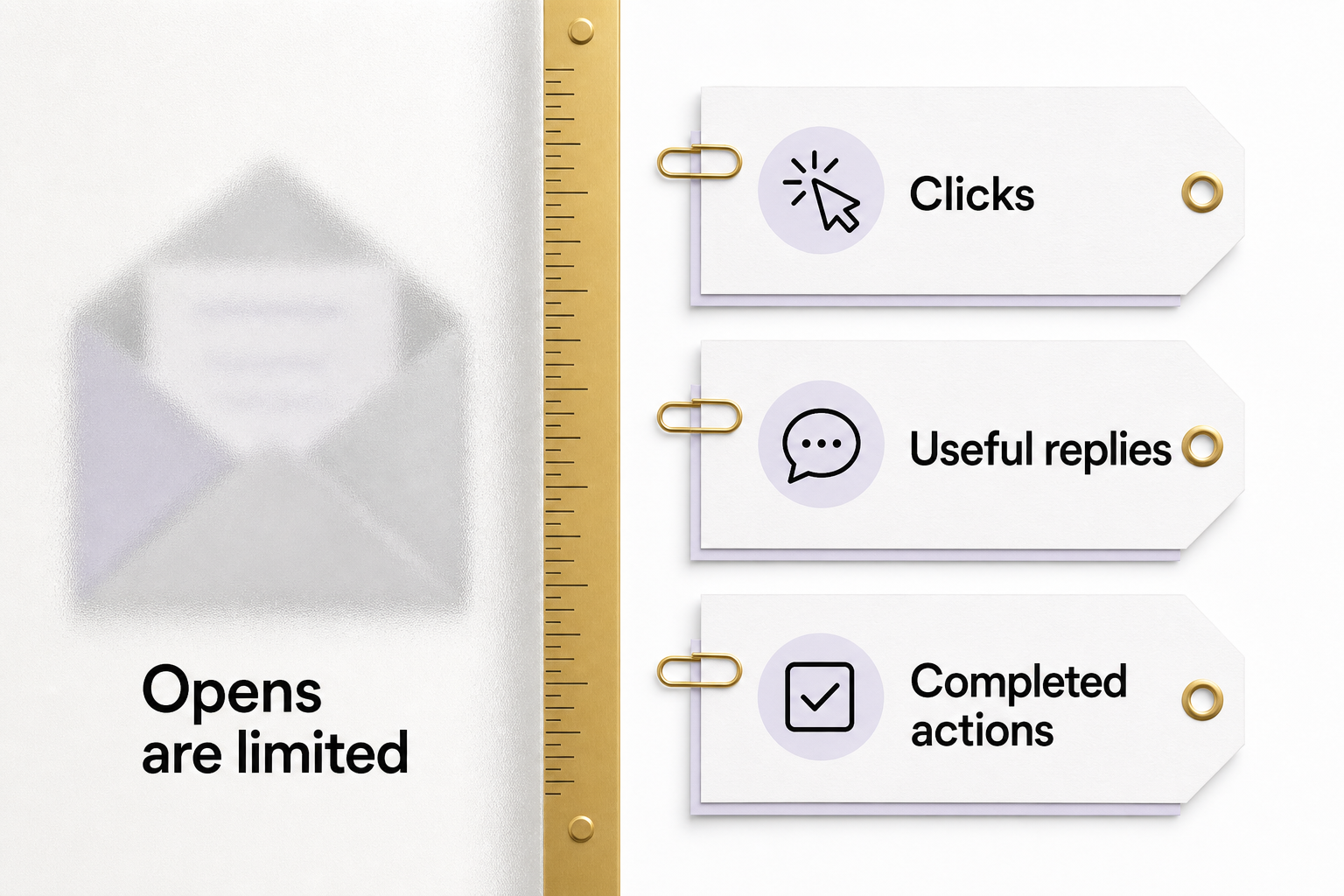
Review delivery issues, complaints, unsubscribes, useful replies and completed actions. Treat opens as an imperfect signal rather than proof that a person read the message. Automated systems and privacy features can complicate engagement interpretation.
Use consistent campaign parameters where appropriate; Google’s URL tools support identifying campaign traffic. Keep private data out of those URLs. Google Analytics 4: URL builders
When testing, change one meaningful element and decide the outcome in advance. Small lists may need qualitative feedback more than a confident statistical winner. Improve the next sequence from evidence, not from whichever AI draft sounds most exciting.
To connect your email plan to your content and customer journey, schedule an Eastmoor Digital discovery call.
Sources & further reading
Primary references checked for this refresh. Availability and platform behavior may change.
- Gmail: Email sender guidelinesChecked 2026-08-31
- FTC: CAN-SPAM compliance guideChecked 2026-08-31
- Google Analytics 4: URL buildersChecked 2026-08-31