

A customer leaves a review about a late arrival. The owner wants to defend the business. An AI tool offers a polished reply within seconds. Before posting it, someone still needs to check whether it is accurate, appropriate and safe to say publicly.
Online customer reviews are both public evidence and operational feedback. Managing them well means respecting the experience behind the words. Faster replies and more requests are useful only when they preserve trust.
Choose the right platform process
Start with the review platforms customers actually use to evaluate your business. Confirm ownership and accurate profile details. Record who monitors each platform and who approves sensitive responses.
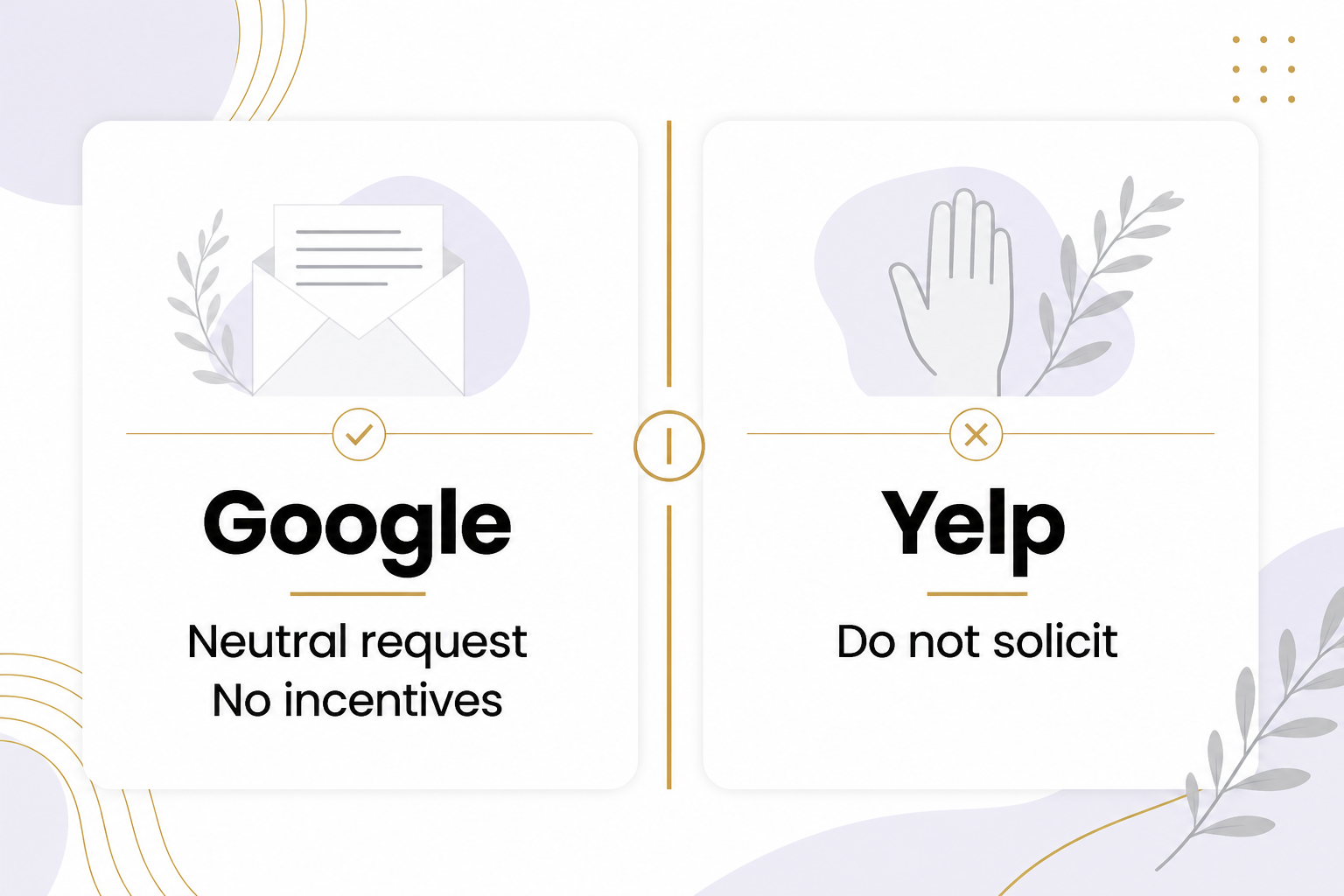
Read the platform’s policy before asking for reviews. Google allows requests for genuine feedback without incentives or attempts to influence the rating. Yelp’s policy tells businesses not to solicit reviews. One request process does not fit every platform. Google Maps: Prohibited and restricted content Yelp: Don’t ask for reviews
For platforms where requests are allowed, use a consistent, neutral invitation after a relevant customer experience. Do not ask only people who first report being happy. Do not route satisfied customers to a public review and dissatisfied customers to a private form as a way to shape the public rating.
Keep the request simple and honest
A suitable request identifies the experience and gives the customer an optional way to share it. For example: “If you would like to share your experience, here is our review page.” Adapt the message to the platform and your communication permissions.
Do not write the review for the customer, ask them to include target keywords or pressure them to choose a rating. Do not offer discounts, prizes or other benefits for Google reviews. A campaign that looks efficient in a dashboard can still misrepresent the experience.
The FTC’s reviews rule addresses fake reviews and deceptive testimonial practices, including certain uses of fabricated AI content and incentives. The details matter, and platform rules may be stricter. Seek qualified advice for a specific legal question rather than treating this article as a safe harbor. FTC: Consumer Reviews and Testimonials Rule Q&A
Respond to the issue, not the star count
For positive feedback, thank the person and acknowledge a detail they actually shared. A short, natural response is often enough. Avoid turning every reply into a sales pitch or repeating a list of services.
For criticism, slow down. Identify what is known, what needs investigation and what can be said publicly. Acknowledge the concern without inventing facts or promising compensation you are not authorized to offer.
Invite private follow-up through an appropriate business channel when needed. Do not disclose purchase records, personal details, case information or a customer’s history to win an argument. In sensitive sectors, even confirming a relationship may require special care.
Use AI for drafts and theme analysis
An assistant can propose a response based on the review and approved response rules. Give it constraints: no invented facts, no private details, no promises and no speculation about the reviewer’s motives. A person should review the draft against the actual situation.
For analysis, use permitted review data and minimize personal identifiers. Ask AI to group comments by service issue, return the reviews behind each group and distinguish repeated observations from isolated remarks. Keep negative and mixed feedback in the analysis.
A summary is not a customer quote. If you turn a theme into website copy, describe it as your interpretation and verify it. Do not put quotation marks around generated language or attach a real person’s name to words they did not write.
A hypothetical example
A service business notices comments about confusing appointment windows. AI groups several reviews under “scheduling.” The owner reads the originals and finds two different issues: unclear arrival estimates and unanswered rescheduling requests. The right action is to improve those two processes, not merely publish warmer replies.
Handle suspected policy violations with evidence
A negative review is not automatically fake. A missing match in your customer database does not, by itself, prove that no experience occurred. Collect the relevant facts and use the platform’s reporting process for a specific policy concern.
Keep a record of the review, date, issue reported and response from the platform. Avoid retaliation, threats or paying someone to remove criticism. Do not promise a review can be removed before the platform decides.
Measure the health of the process
Review response timeliness, recurring service issues, unresolved complaints and whether requests follow policy. Track review trends with enough context to explain changes. A rating alone cannot tell you whether the business improved.
If you display reviews on your website, preserve meaning, attribution and any required disclosures. Make sure the presentation does not falsely imply that a selected group represents every review received.
For help connecting review management to a sound local marketing process, start with an Eastmoor Digital discovery call.
Sources & further reading
Primary references checked for this refresh. Availability and platform behavior may change.
- Google Maps: Prohibited and restricted contentChecked 2026-08-31
- Yelp: Don't ask for reviewsChecked 2026-08-31
- FTC: Consumer Reviews and Testimonials Rule Q&AChecked 2026-08-31