

Imagine a customer researching a future kitchen project. They are comparing ideas and saving examples, but have not chosen a supplier or searched for your business. A display ad may introduce a relevant option during that process.
Display advertising places visual messages within websites, apps and other supported environments. It can support awareness, consideration or a return visit. It also makes it easy to buy impressions without learning whether the right people cared. The useful question is what role it should play in your buying journey.
Decide whether display fits the job
Search advertising often reaches a person expressing a need through a query. Display can reach people while they are doing something else. Your message must explain its relevance rather than assume the person is ready to buy.
Consider display when a visual demonstration helps, the buying decision takes time or a specific audience needs education. Be cautious when the business cannot explain the offer, handle inquiries or measure the next step. Fix those problems before paying to expose more people to them.
Do not combine every visual advertising channel into one plan. A social feed campaign and an open-web display campaign may share assets, but they have different controls, reports and audience contexts.
Know what changed in Google Ads
Google says Display campaigns are moving into Demand Gen. Eligible advertisers could begin voluntary migration in June 2026; later changes include new-campaign creation and remaining eligible migrations. Inspect your account’s notices before following an older tutorial.
This is a reason to check campaign type and inventory, not an instruction to rebuild a working campaign immediately. Record current settings and reporting before migration. Compare destination controls and plan how to recognize a meaningful change in delivery.
Give the campaign one primary purpose
Write down the outcome and the action you will measure. A campaign introducing a product line might direct people to a comparison page. A service campaign might invite a qualified inquiry. A reminder campaign might support an unfinished purchase.
Choose a bounded test budget the business has approved. Include creative production and follow-up time when judging cost. Avoid expanding spend simply because the platform can find more impressions.
For a hypothetical kitchen supplier, a first test could promote a materials comparison guide to people in the actual service area. The next step should help evaluate a project, not demand a purchase before the visitor understands the options.
Understand audience signals and controls
Platforms may use content context, audience data and automated prediction to decide where to show an ad. Availability varies with campaign type, consent, account settings and policy. A suggested audience is not always a strict boundary.
Separate restrictions the business needs from ideas it wants the system to explore. Service geography and inappropriate-content exclusions deserve attention. Customer-list and website-audience use needs an appropriate permission basis and clear purpose.
Review actual delivery reports. A theoretical persona cannot tell you which placements received the budget. A high click count cannot tell you whether visitors were suitable customers.
Prepare creative for automated assembly
Google describes responsive display ads as AI-assembled combinations of creative assets. Build headlines, descriptions and images that remain accurate in different arrangements. One component should not depend on another to make a qualification clear.
Use AI to explore visual concepts or alternate phrasing from approved facts. Keep product appearance, service capabilities and customer evidence under human review. Generated people and scenes must not imply real endorsements or projects that never happened.
Preview the destination too. A comparison ad leading to a crowded homepage breaks the promise. The landing page should explain the subject, make the next action visible and work on a phone.
Measure attention separately from business value
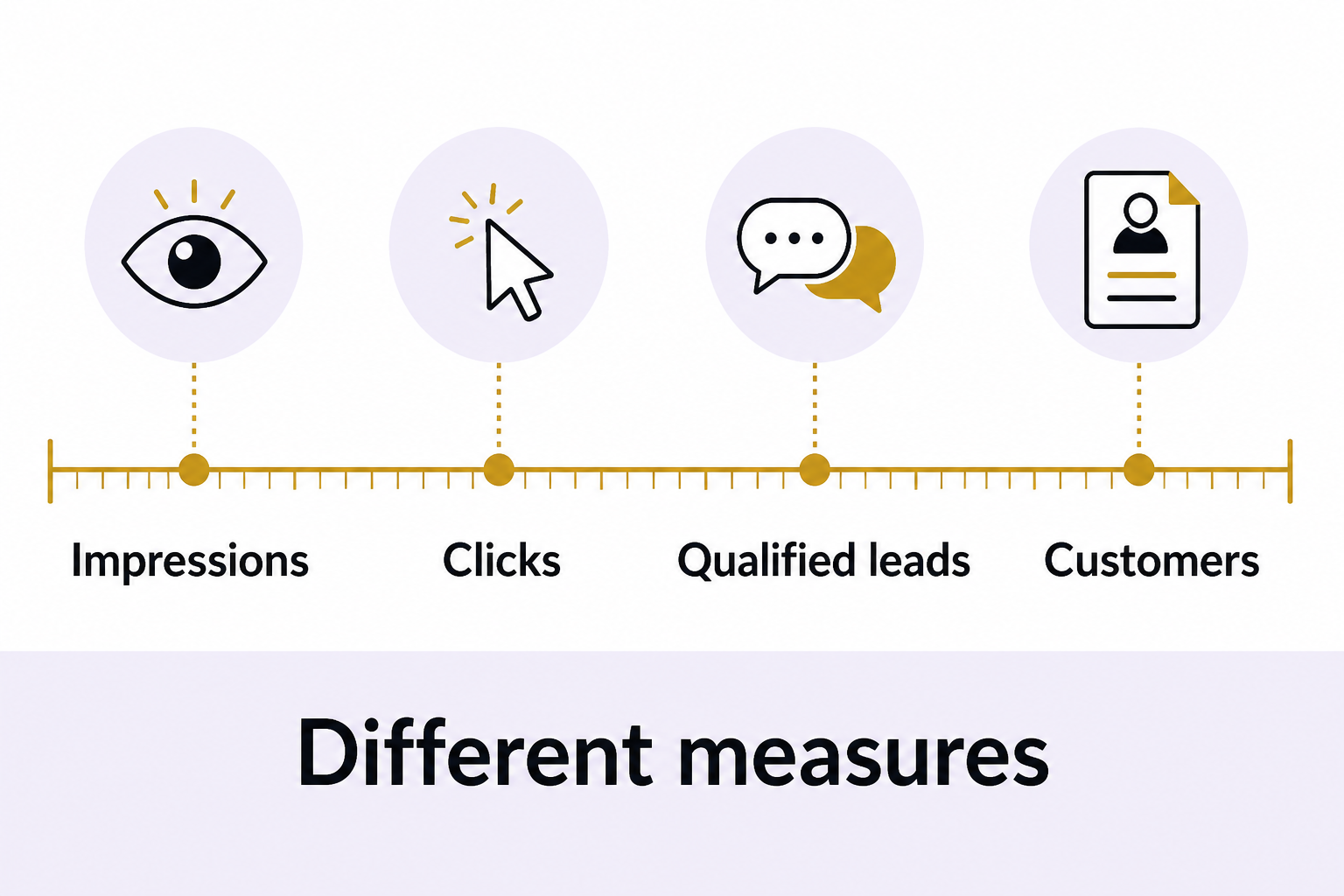
Impressions describe delivery. Clicks describe an interaction. Neither establishes incremental sales. Review meaningful site actions and CRM outcomes alongside the ad report, recording attribution windows and conversion definitions.
For leads, distinguish a form submission from an eligible inquiry, an attended appointment and a customer. For sales, inspect returns and margin before calling attributed revenue profitable. View-based and click-based attribution can tell different stories; avoid combining reports without understanding overlap.
Run a review that leads to a decision
At the review point, inspect creative, placements, audience delivery, destination behavior and customer quality. Identify whether the message was unclear, the audience unsuitable or the follow-up broken. Change one major hypothesis at a time where practical.
Keep the campaign only if it serves its intended role at an acceptable cost and workload. AI can summarize reports, but verify comparisons against underlying date ranges and definitions.
To assess whether display belongs in your marketing mix, book a discovery call with Eastmoor Digital.
Sources & further reading
Primary references checked for this refresh. Availability and platform behavior may change.
- Google Ads: Responsive display creative and Demand Gen migration noticeChecked 2026-08-31
- Google Ads: About responsive display adsChecked 2026-08-31