

You visit a website and notice an ad for a product you recently considered. Later, you see a different version of the same business’s message inside an app. It can look as though one finished banner is following you everywhere.
In reality, several systems may be involved: a publisher offering space, an advertising platform choosing an eligible message and software assembling the creative. Understanding how display ads work helps a business investigate where money went and whether its controls match its intentions.
A placement is the location where an ad appears
A publisher can make advertising space available on a website or within an app. The available format and context affect what can appear there. A wide banner, an in-content image and an app placement are different surfaces even if they draw from the same campaign assets.
An advertiser usually works through a platform or buying system rather than contacting every publisher. Campaign settings determine which inventory is eligible. The exact process differs across advertising products, so avoid assuming one platform’s options apply everywhere.
Eligibility comes before delivery
An ad needs to satisfy relevant policies and campaign requirements before it can compete for a placement. Its format must fit the inventory, and its campaign must be active with an available budget. Audience, geography and content settings can further affect eligibility.
That explains why an approved ad may not appear when you personally browse a site. Approval does not mean every user, device or moment is eligible. Repeatedly searching for your own ad is a poor substitute for checking delivery reports and diagnostics.
Start troubleshooting with campaign status, dates, budget, policy notices and destination availability. Record what you find before changing several settings at once.
AI can influence both selection and appearance
Advertising systems use prediction to help decide which message to show. Some also assemble the visible ad. Google’s responsive display format combines supplied assets using AI, adapting the result to available spaces.
This means the advertiser’s job includes reviewing components, not just one preview. A headline should remain accurate beside every relevant image. A limitation should not disappear because it exists only in a description that a particular format omits.
Generated enhancements create another review point. Inspect actual product details, crop quality and brand presentation. Keep source assets and settings documented so an unexpected result can be traced to its cause.
Audience ideas are different from hard boundaries
A campaign might use contextual information, audience selections or automated expansion. Some inputs guide a model; others restrict delivery. Read the control’s actual description before relying on it as a boundary.
For a hypothetical bicycle shop, “people interested in cycling” is a broad audience idea. An actual service area is an operational limit. Treating both as equally strict could lead to inquiries the shop cannot serve.
Website audiences also depend on how data was collected, available identifiers and applicable platform rules. Do not describe retargeting as a system that can identify and reach every past visitor. Privacy choices and technical limits matter.
Check the campaign’s current home and inventory
Google documents Display’s move into Demand Gen, while retaining a way to buy Display-only campaigns. A change in campaign interface does not automatically mean you must use every available channel.
Before migrating or rebuilding, compare inventory selection, exclusions, asset support and conversion settings. Save a record of the prior configuration. If a particular format or control is not supported yet, resolve that gap before assuming the new setup is equivalent.
Use placement reports as evidence, with limits
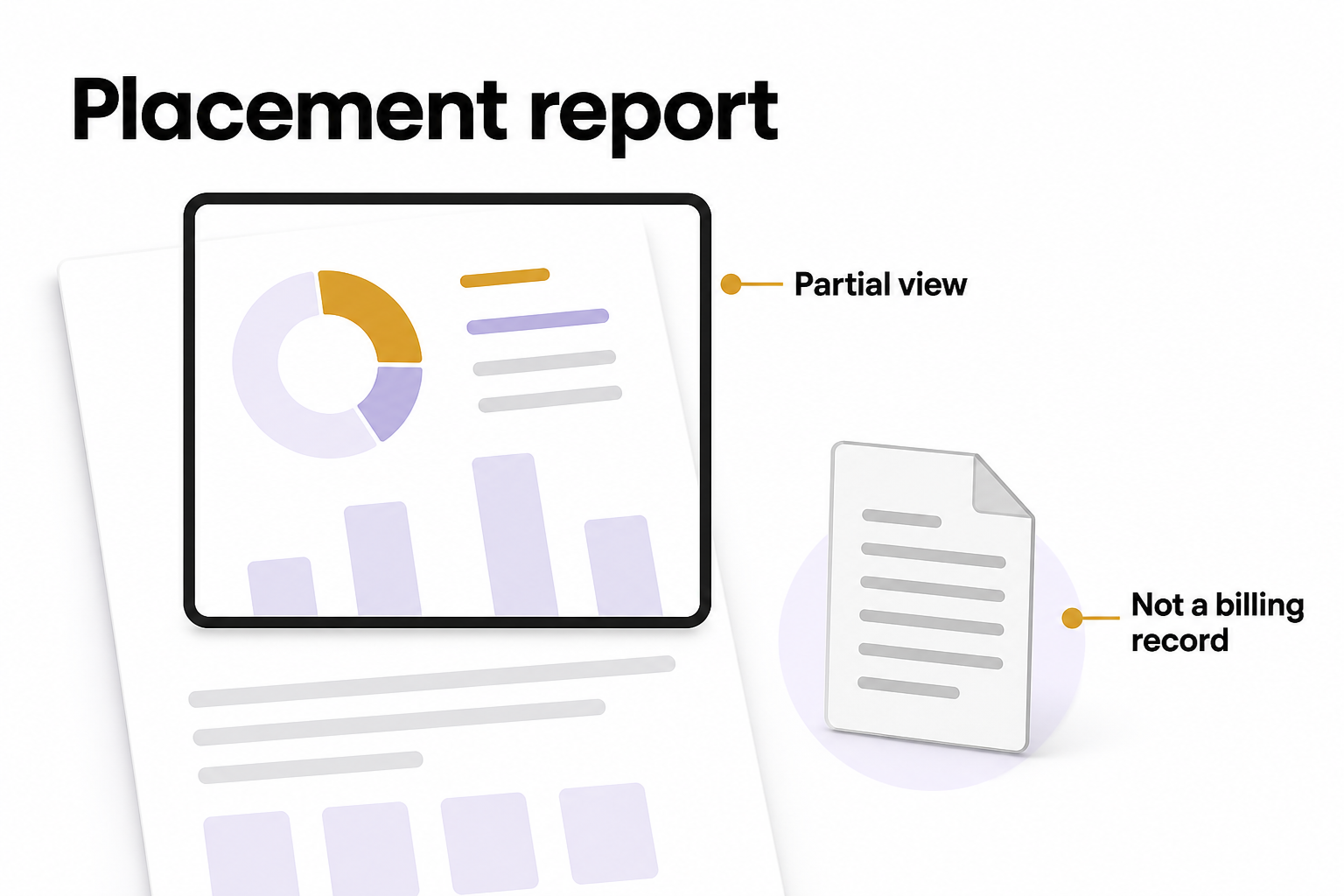
Google’s “Where ads showed” report identifies placement information but is not exhaustive or a billing statement. Some low-activity placements may be absent, and report treatment can differ from other views.
Review patterns rather than declaring a problem from a single unfamiliar domain. Look at spend, activity, suitability and downstream outcomes. If a placement is clearly inappropriate, apply the relevant exclusion and verify its scope.
Website analytics describes activity on your own site. It does not independently observe every ad impression on other publishers. Compare platform delivery reports with site behavior and customer records instead of expecting identical totals.
Investigate an unexpected result methodically
Suppose the bicycle shop receives unsuitable inquiries after a campaign change. Confirm the date of the change, inventory settings, geography behavior, creative and form wording. Then check actual inquiries before concluding that one placement caused the issue.
AI can organize exported reports and suggest questions. Verify its arithmetic and the meaning of each column. Keep sensitive customer information out of unnecessary exports.
The goal is a campaign you can explain and improve. For help connecting delivery controls to business outcomes, schedule a discovery call with Eastmoor Digital.
Sources & further reading
Primary references checked for this refresh. Availability and platform behavior may change.
- Google Ads: Where ads showed reportChecked 2026-08-31
- Google Display campaigns have a new home in Demand GenChecked 2026-08-31
- Google Ads: About responsive display adsChecked 2026-08-31