

A local customer wants practical answers: Do you serve their area? Can you handle the problem? When are you open? What happens after they contact you? Local SEO begins by making those answers accurate and easy to find.
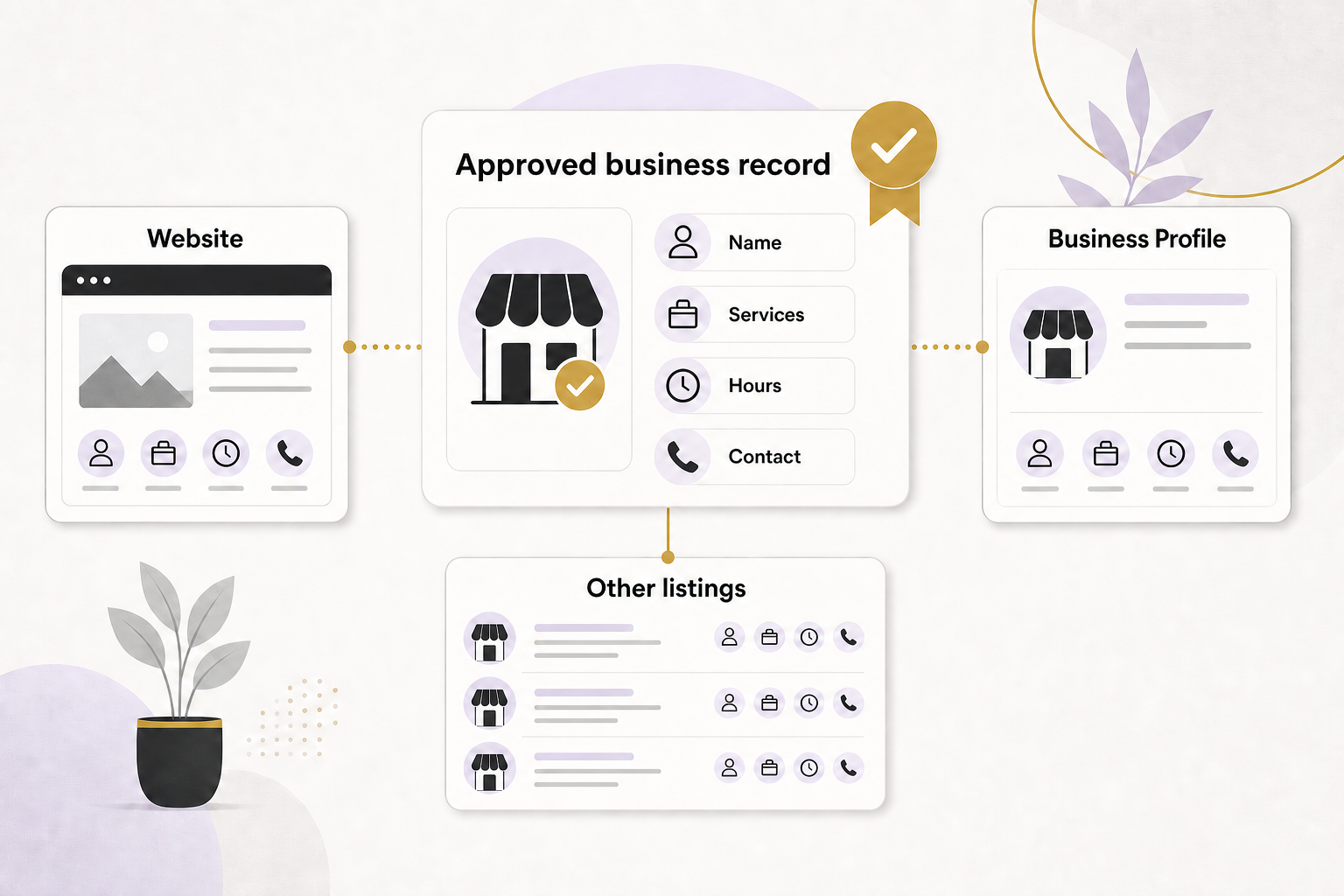
AI-assisted search makes consistency worth careful attention. Your website, business profile and other public records should describe the same real business. A polished AI-generated description cannot fix conflicting opening hours.
Start with the business record
Google describes local ranking in terms of relevance, distance and prominence. Its local-ranking guidance emphasizes complete, accurate business information. You cannot purchase a better organic local position from Google.
Maintain a fact sheet with the trading name, customer-facing address or service-area arrangement, phone, canonical website, services, regular hours and holiday exceptions. Assign an owner to changes. Do not create a fictional office to target another town.
Make service pages locally useful
A page should explain the work, who it suits, where it is available and how to request it. Include genuine constraints: a service may only cover particular areas or require an inspection before an estimate.
If you create a location page, give it a reason to exist beyond a substituted place name. Verified project information, access considerations or a distinct service arrangement may help. Do not invent local stories or turn every nearby town into the same thin page.
Use current AI tools with account limits in mind
Google now documents a Gemini connection for eligible Business Profile owners. It can help with profile information, review drafts and performance questions. The current help page describes gradual rollout, a personal account managing only one verified profile, supported languages and regional restrictions; the EEA and UK are excluded at the time checked.
The connection currently works only in the Gemini web app and requires Keep Activity to be enabled. Review that data setting and the account’s eligibility before connecting. Begin with a read-only question, such as asking what hours are recorded. Compare the answer with the actual profile. Do not authorize an agent to rewrite business details based on an unverified website passage or its own assumptions.
For an update, approve the exact new information and then read the profile back. Conversational convenience does not remove the need to verify the destination.
Keep feedback authentic
Build a process for listening to customers and responding to their actual experience. AI can suggest a clearer reply, but a person should check tone, accuracy and privacy. Never fabricate reviews or let an automated response disclose private details about a customer.
When someone reports a problem, investigate before drafting a confident explanation. A useful reply acknowledges the issue and offers an appropriate next step without arguing publicly about facts you have not checked.
Connect discovery to a working contact path
Test the website link, phone link and appointment route on a mobile device. Confirm that the destination matches what the profile promises. A visitor requesting a local service should not land on an unrelated generic page.
For a hypothetical repair business, this could mean linking its profile to a page that explains service coverage and the information needed to request a visit. The business should verify its own availability and response expectations; the copywriter should not guess.

Measure the outcomes you can verify
Review profile interactions alongside website analytics and actual inquiries. A direction request is not a confirmed visit; a phone click is not necessarily a completed call. Keep those distinctions in reporting.
Log changes to hours, categories, pages and contact links. Review trends over comparable periods and ask customers how they found you where appropriate. Do not treat a single AI answer or a single map search as a stable visibility score.
Book a discovery call with Eastmoor Digital to identify the local information and contact-path fixes that deserve attention first.
Sources & further reading
Primary references checked for this refresh. Availability and platform behavior may change.
- Google: Improve local rankingChecked 2026-08-31
- Google: Manage Business Profile with GeminiChecked 2026-08-31