
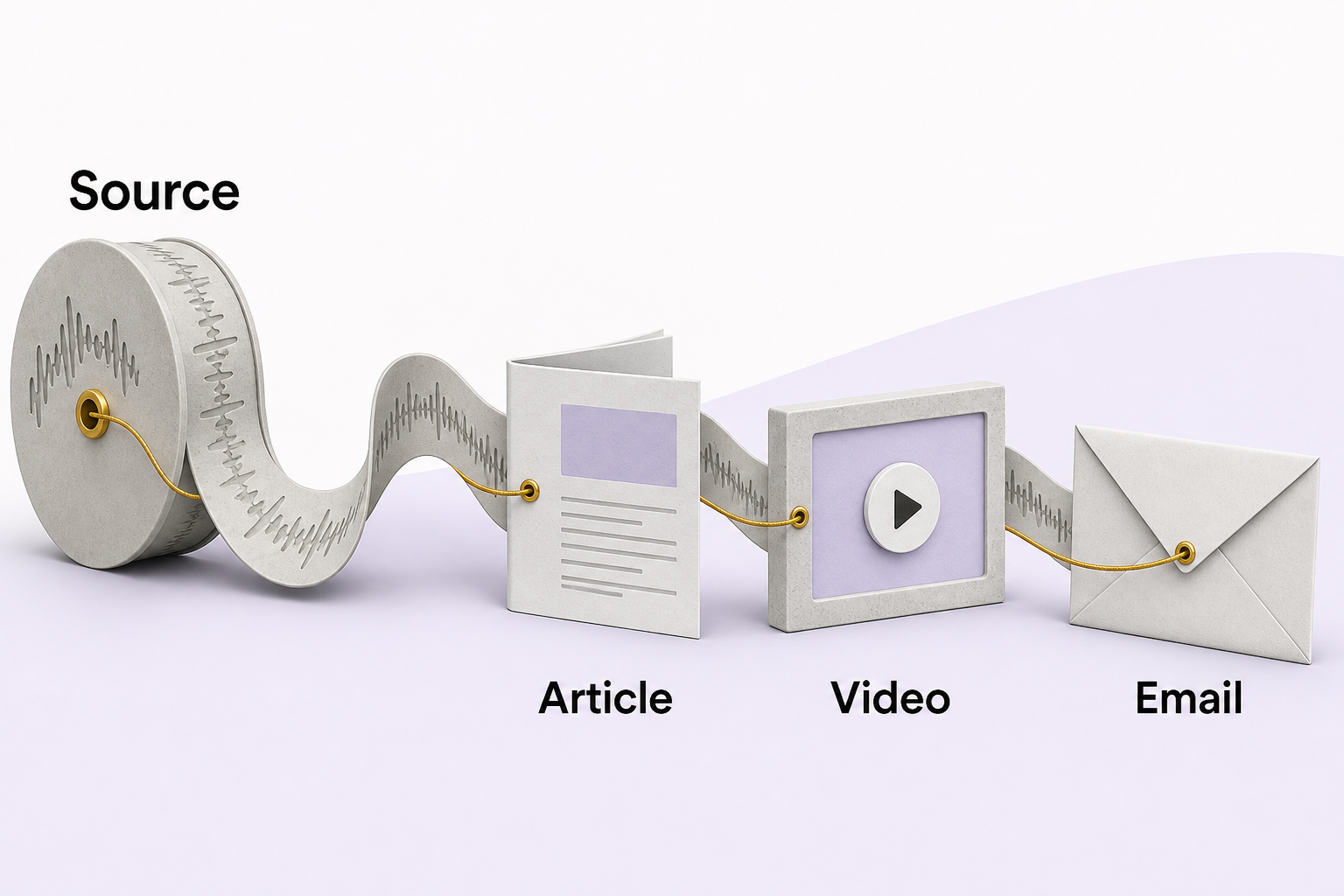
A useful recording sits in a folder. It answers questions customers ask every week, but only the people who attended the original session have heard it. Repurposing content starts by making that knowledge easier to find and use.
AI can now turn source material into drafts across several formats. That creates opportunity and risk: an assistant may preserve the topic while changing the meaning. A reliable process keeps the source, the audience and the purpose connected.
Choose a source worth extending
Start with material that answers a real question and remains accurate. It might be an article, interview, demonstration or presentation. Check its claims, links, product details and permissions before producing new versions.
Do not repurpose a weak source simply because it is long. A rambling recording can become ten rambling posts. Identify the specific explanation, decision or demonstration that deserves another audience.
Record who owns the material, whether participants agreed to reuse and which sections contain confidential information. A public event does not automatically resolve every right attached to music, photographs or guest contributions.
Create a source map before drafting
Write a short inventory of the main ideas, supporting evidence and important qualifications. For recordings, include timestamps. For documents, retain headings or page references. Mark outdated sections and anything that must not appear publicly.
Then identify the audience question each idea answers. One source may support several pieces, but each piece should have its own purpose. Avoid creating multiple versions that compete for exactly the same job.
This map also gives AI a constrained assignment. Ask it to use only approved sections and identify the source of each factual statement. Missing evidence should produce a question, not a confident addition.
Use current AI tools as production assistants
Google renamed NotebookLM Gemini Notebook in July 2026. Its source-based research approach can help organize material, while access to newer capabilities varies by plan and rollout.
Google’s research update describes additional document, chart and spreadsheet outputs. Those are potential working formats, not a reason to publish an unreviewed generated report. Check citations, numbers and visual representations against the source.
Keep an approved version of the original and the generated draft. If the tool creates a chart, verify units, labels and calculations. If it rewrites a quote, present the result as a paraphrase rather than retaining quotation marks.
Give each format a distinct job
A full article can explain the reasoning and limitations. A short video can demonstrate one step. A carousel can compare choices. An email can connect the material to a subscriber’s stated interest. A checklist can help someone act later.
Consider a hypothetical workshop on choosing office lighting. The article could explain assessment questions, the video could show glare at a desk, and the checklist could help record room conditions. These are adaptations of the same subject, not identical copy pasted into different containers.
Rewrite the opening for the format. A person watching a clip may not know the speaker or the original question. Add enough context that the excerpt makes sense alone.
Preserve qualifications when shortening
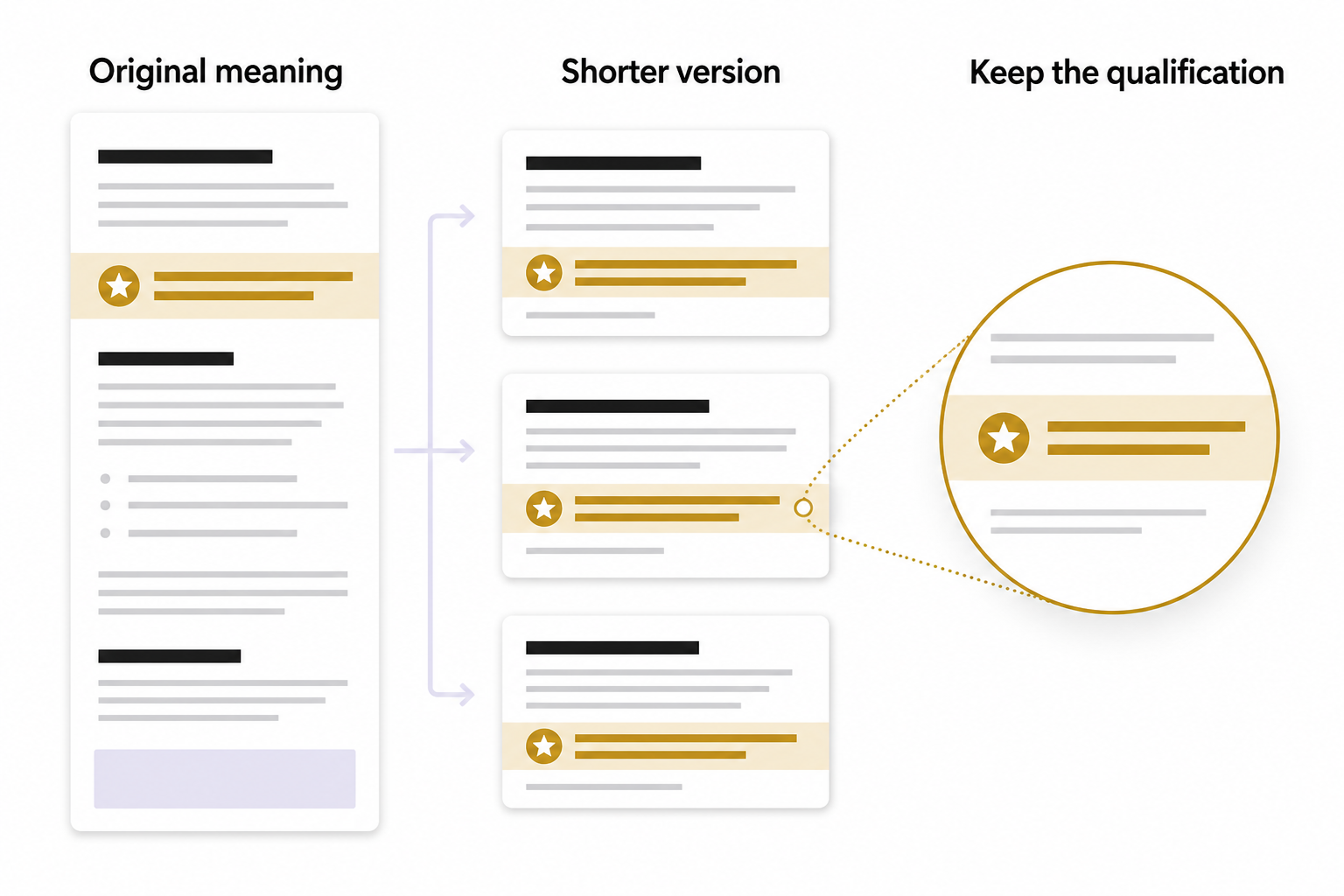
Look closely at words such as “may,” “in this case” and “depending on.” Removing them can turn a careful explanation into a claim the source never made. A strong hook should not exaggerate the conclusion.
Do not use an unrelated image to imply a result. Label hypothetical examples and illustrations clearly. Real customer evidence must remain attributable and approved for the intended use.
Check generated captions against the audio. Names, technical terms and negations deserve particular attention because a small error can reverse the meaning.
Translate only with a complete audience plan
Meta documents AI translation and dubbing for Reels. Available languages and controls vary, and business-critical wording still needs review.
Translation should connect people to information and services they can actually use. If the destination page, inquiry process or service cannot support the language, address that gap before extending the campaign. Do not mistake more views for a better customer experience.
Publish with a clear source of truth
Keep one maintained page for the full explanation where appropriate. Link shorter versions to it when that helps the reader. If a product or recommendation changes, use your inventory to find and update related assets.
Track what each format contributes: relevant visits, useful replies, resource use and qualified inquiries. Include editing and review time. The goal is more value from sound material, not the largest possible content count.
To turn existing expertise into a manageable content system, schedule an Eastmoor Digital discovery call.
Sources & further reading
Primary references checked for this refresh. Availability and platform behavior may change.
- Google: NotebookLM is now Gemini NotebookChecked 2026-08-31
- Google: Do your best research with NotebookLMChecked 2026-08-31
- Meta AI translation for ReelsChecked 2026-08-31