

A business owner receives a connection request, accepts it and immediately gets a long sales pitch that could have been sent to anyone. The sender has automated the sequence. The recipient has learned almost nothing useful about the business.
LinkedIn lead generation works better when professional relevance comes before volume. A clear profile, useful explanation and timely conversation can help the right person investigate your offer. AI can assist the preparation, but it should not manufacture familiarity or replace judgment.
Define the professional problem you solve
Choose a buying situation that your business understands. Identify the role involved, the decision they need to make and what commonly delays it. Job title alone is not enough; the same person can have very different needs during an expansion, a repair or a routine review.
Write the value proposition in language the buyer uses. Explain the work and its relevance without promising a specific result. If several people influence a decision, note their different questions rather than treating the whole organization as one persona.
Make the profile support that decision
Use a current photo or recognizable business identity. Write a headline and summary that explain the work, audience and relevant experience. Give visitors a clear route to learn more or inquire.
Review the company page too. Keep the description, website and featured material current. A post may introduce you, but the profile often helps someone decide whether the conversation is worth continuing.
Use only real experience, approved examples and accurate credentials. AI can improve the organization of a profile, but it must not add clients, achievements or endorsements that were not provided.
Publish something a buyer can use
Answer a question that arises before a purchase. Explain a tradeoff, show a process or identify a common planning mistake. Give enough detail for the reader to apply the lesson without booking a call.
Consider a hypothetical packaging supplier speaking to operations managers. A useful post might explain what information to gather before requesting a packaging quote. A follow-up could demonstrate how product dimensions affect the conversation. Neither requires an invented success story.
Build a short content series from related questions. Keep each post focused and link to a fuller explanation where useful. Do not turn every educational paragraph into a pitch.
Use AI to prepare, then add your judgment
Give an assistant approved service information and anonymized questions from actual conversations. Ask it to propose outlines or identify unclear wording. Review every factual claim and remove generic business language.
A model can simulate objections for rehearsal, but the simulation is not evidence of what buyers believe. Test the explanation through real conversations. If people repeatedly misunderstand a term, change the explanation rather than asking the model to produce more polished versions.
Keep confidential customer information out of research prompts unless the tool, agreement and data handling have been approved for that use.
Respect the difference between assistance and prohibited automation
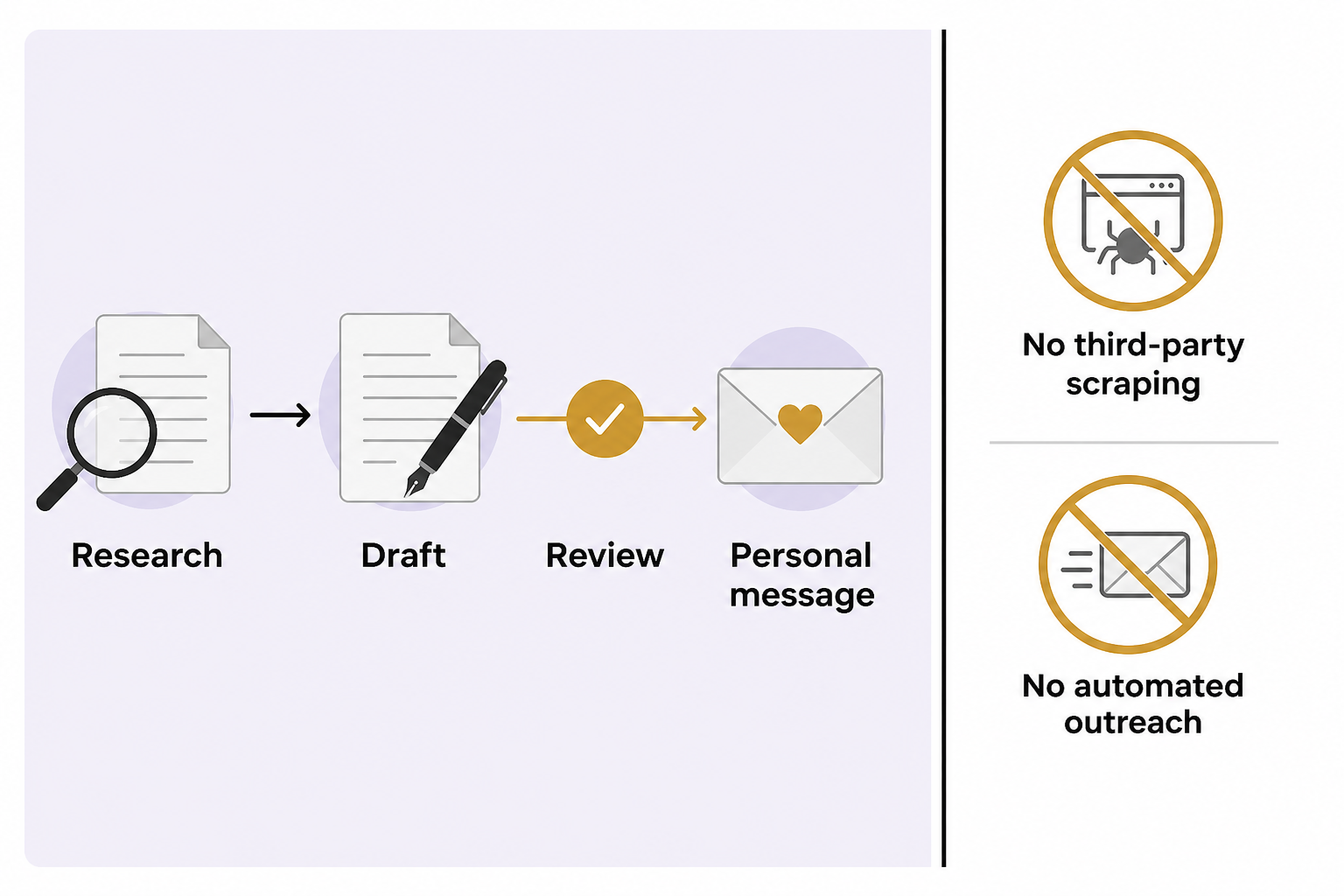
LinkedIn prohibits third-party software that scrapes or automates activity on its website. Do not assume a browser extension is acceptable because it describes itself as an AI sales assistant.
Use supported platform features and authorized integrations within their rules. Drafting an outline locally is different from automatically visiting profiles, sending invitations or posting comments. Read the actual policy and integration permissions before connecting a tool.
When a person shows interest, respond to their specific question. Avoid false claims that you read work you did not inspect or remember a conversation that did not happen.
Treat paid lead generation as a separate test
LinkedIn documents AI-assisted Accelerate campaigns and evolving lead-generation formats. These can support campaign creation and delivery, but the offer and qualification process remain your responsibility.
Define the outcome before spending: a relevant inquiry, event registration or another deliberate action. Make the form explain what happens next. Confirm that submitted records reach the CRM with the right fields and permissions.
Inspect audience and creative suggestions. Do not accept a generated description that overstates the service or a broad audience simply because the platform recommends it.
Measure conversations that progress
Track useful replies, relevant inquiries, qualified opportunities and the later buying outcome. Profile views and reactions can indicate attention, but they do not establish pipeline value.
Record the content or campaign that started a conversation when possible. Include the time spent creating content and following up. Review lost reasons as carefully as wins; they often show which explanation or qualification step needs work.
To build a LinkedIn approach around a clear buyer and offer, schedule an Eastmoor Digital discovery call.
Sources & further reading
Primary references checked for this refresh. Availability and platform behavior may change.
- LinkedIn Marketing Solutions product updatesChecked 2026-08-31
- LinkedIn automated activity policyChecked 2026-08-31